TPS659102
Integrated power management ICs with multiple outputs and compact QFN packaging
Manufacturer: ti
series introduction
# TPS659102 Product Series Introduction
## 1. Overview
The TPS659102 product series is a cutting - edge family of power management integrated circuits (PMICs) developed by Texas Instruments. These PMICs are designed to meet the complex power requirements of modern electronic devices, offering a high - level of integration, efficiency, and flexibility. They are well - suited for a wide range of applications, including smartphones, tablets, wearables, and other portable consumer electronics.
## 2. Key Features
### 2.1 High - Level Integration
- **Multiple Voltage Regulators**: The TPS659102 series integrates multiple voltage regulators, such as buck converters and low - dropout regulators (LDOs). This allows it to generate different voltage levels required by various components in a system, such as the processor, memory, and display. For example, it can provide a stable 1.8V for the memory and 3.3V for the I/O interfaces from a single input voltage source.
- **Power Sequencing**: It has built - in power sequencing capabilities. This is crucial for ensuring that different components in a system power up and down in the correct order. For instance, the core voltage of a processor may need to be powered up before the I/O voltage to prevent damage to the device. The TPS659102 can be programmed to control this sequencing precisely.
### 2.2 High Efficiency
- **Advanced Converter Topologies**: The buck converters in the TPS659102 series use advanced topologies that minimize power losses. They can achieve high conversion efficiencies, especially at light loads. This is important for battery - powered devices as it helps to extend the battery life. For example, in a smartphone, high - efficiency power management can result in longer talk time and standby time.
- **Low Quiescent Current**: The PMICs have a low quiescent current, which is the current consumed by the device when it is in a standby or idle state. This further contributes to the overall power efficiency of the system, making it ideal for applications where power consumption needs to be minimized during periods of inactivity.
### 2.3 Flexibility
- **Programmable Parameters**: Many of the parameters of the TPS659102 series, such as output voltages, power sequencing, and soft - start times, can be programmed. This allows designers to customize the power management solution according to the specific requirements of their application. For example, if a particular device requires a non - standard output voltage, the PMIC can be programmed to generate that voltage.
- **Multiple Input Voltage Options**: The series supports a wide range of input voltage levels, which gives designers more flexibility in choosing the power source. It can accept input voltages from different types of batteries, such as lithium - ion and nickel - metal hydride, as well as from external power supplies.
### 2.4 Protection Features
- **Over - Voltage Protection (OVP)**: The TPS659102 includes OVP circuits that protect the connected components from excessive voltage. If the output voltage exceeds a predefined threshold, the OVP circuit will take action to limit the voltage and prevent damage to the device.
- **Over - Current Protection (OCP)**: OCP is implemented to protect the PMIC and the load from excessive current. In case of a short - circuit or an over - current condition, the OCP circuit will shut down the relevant regulator to prevent overheating and damage.
- **Thermal Protection**: Thermal protection mechanisms are in place to prevent the PMIC from overheating. When the temperature of the device exceeds a safe operating limit, the thermal protection circuit will reduce the power output or shut down the device to avoid damage.
##
Images for reference

48-VQFN-RSL
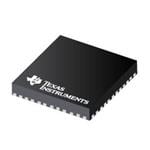
Image Preview
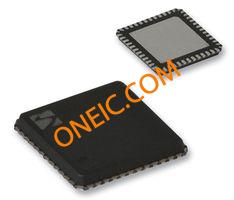
Image Preview