TMS32C6713BPYPA200
High-performance 32-bit floating-point digital signal processors for advanced computing
Manufacturer: ti
series introduction
# Introduction to the TMS32C6713BPYPA200 Product Series
## 1. Overview
The TMS32C6713BPYPA200 belongs to Texas Instruments' TMS320C67x family of digital signal processors (DSPs). These processors are renowned for their high - performance floating - point processing capabilities, making them well - suited for a wide range of applications that demand intensive numerical computations.
## 2. Key Features
### 2.1 Processing Power
- **Clock Speed**: The "200" in the part number indicates that the TMS32C6713BPYPA200 operates at a clock speed of 200 MHz. This high clock rate enables the processor to execute a large number of instructions per second, facilitating rapid data processing.
- **Floating - Point Unit (FPU)**: It is equipped with a powerful floating - point unit. Floating - point arithmetic is crucial for applications such as audio and video processing, scientific simulations, and telecommunications, where precise numerical calculations are required. The FPU allows the DSP to handle complex mathematical operations with high accuracy.
### 2.2 Memory
- **On - Chip Memory**: The TMS32C6713BPYPA200 has a significant amount of on - chip memory. This includes both program memory and data memory. The on - chip memory reduces the need for external memory access in many cases, which in turn speeds up the processing time as data can be retrieved and stored more quickly.
- **Memory Interface**: It also features a flexible memory interface that can be used to interface with external memory devices such as SDRAM, Flash memory, and SRAM. This allows for the expansion of the available memory space, enabling the DSP to handle larger data sets and more complex applications.
### 2.3 Peripherals
- **UART (Universal Asynchronous Receiver - Transmitter)**: The UART peripheral enables serial communication with other devices. It is commonly used for communication with computers, sensors, and other serial - enabled devices. This allows the TMS32C6713BPYPA200 to exchange data with external systems easily.
- **SPI (Serial Peripheral Interface)**: The SPI interface provides a high - speed serial communication protocol. It is often used for communicating with external devices such as ADCs (Analog - to - Digital Converters), DACs (Digital - to - Analog Converters), and other SPI - compatible chips.
- **I2C (Inter - Integrated Circuit)**: The I2C interface is a multi - master, multi - slave serial communication protocol. It is useful for connecting multiple low - speed devices such as sensors, EEPROMs, and other I2C - enabled components to the DSP.
### 2.4 Power Management
The TMS32C6713BPYPA200 incorporates advanced power management features. It can operate in different power modes, including active mode, standby mode, and sleep mode. These power - saving modes help to reduce the overall power consumption of the device, making it suitable for battery - powered applications or systems where power efficiency is a critical concern.
## 3. Applications
### 3.1 Audio Processing
- **Audio Effects**: The high - performance floating - point processing capabilities of the TMS32C6713BPYPA200 make it ideal for implementing audio effects such as reverb, delay, and equalization. It can process audio signals in real - time, providing high - quality sound output.
- **Audio Compression**: It can also be used for audio compression algorithms such as MP3 or AAC. The DSP's ability to perform complex mathematical operations quickly allows
Images for reference

208-LQFP (exposed pad)
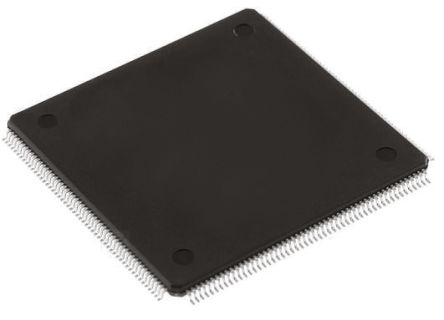
Image Preview
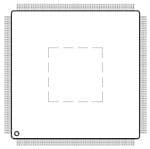
Image Preview