TMS320VC5409APGE16
Fixed-point digital signal processors for high-speed signal processing
Manufacturer: ['analog-devices', 'ti']
series introduction
# Introduction to the TMS320VC5409APGE16 Product Series
## 1. Overview
The TMS320VC5409APGE16 belongs to Texas Instruments' TMS320C54x family of digital signal processors (DSPs). This product series is designed to offer high - performance, cost - effective solutions for a wide range of applications in the field of digital signal processing. With its advanced architecture and rich set of features, it has become a popular choice among engineers and developers working on projects that require efficient signal processing capabilities.
## 2. Key Features
### 2.1 Processing Power
- **High - Speed CPU**: The TMS320VC5409APGE16 is equipped with a high - performance CPU that can operate at a clock speed of up to 160 MHz. This allows it to execute a large number of instructions per second, enabling real - time processing of complex digital signals. For example, in audio processing applications, it can handle high - fidelity audio streams without introducing significant latency.
- **Harvard Architecture**: It utilizes a modified Harvard architecture, which features separate program and data buses. This architecture allows for simultaneous access to program and data memory, significantly improving the processing efficiency. The CPU can fetch instructions from the program memory while simultaneously reading or writing data from the data memory, reducing the overall execution time of programs.
### 2.2 Memory Configuration
- **On - Chip Memory**: The device comes with a generous amount of on - chip memory. It includes 16K words of dual - access RAM (DARAM) and 4K words of single - access RAM (SARAM). The DARAM can be accessed twice per machine cycle, which is beneficial for applications that require high - speed data processing, such as filtering operations. The SARAM provides additional storage space for data and variables.
- **External Memory Interface**: The TMS320VC5409APGE16 also features an external memory interface (EMIF) that supports the connection of external memory devices. This allows for the expansion of the memory capacity, enabling the processing of larger datasets. It can interface with various types of external memories, including synchronous dynamic random - access memory (SDRAM) and flash memory.
### 2.3 Peripheral Interfaces
- **Serial Ports**: It has multiple serial ports, including a buffered serial port (BSP) and a multichannel buffered serial port (McBSP). The BSP is suitable for simple serial communication tasks, while the McBSP supports high - speed, multichannel serial data transfer. This makes it ideal for applications such as voice over IP (VoIP) systems, where multiple audio channels need to be transmitted and received simultaneously.
- **Timer Modules**: The DSP is equipped with two 16 - bit timer modules. These timers can be used for a variety of purposes, such as generating periodic interrupts, measuring time intervals, and controlling the timing of external devices. For example, in a motor control application, the timers can be used to generate precise pulse - width modulation (PWM) signals to control the speed and direction of the motor.
- **Host Port Interface (HPI)**: The HPI provides a direct interface between the DSP and a host processor, such as a microcontroller or a personal computer. This allows for easy communication and data transfer between the DSP and the host, enabling the development of systems where the DSP acts as a coprocessor for the host.
## 3. Applications
### 3.1 Audio Processing
- **Audio Effects**: The high - speed processing capabilities of the TMS320VC5409APGE16 make it suitable for implementing various audio effects, such as reverb, echo, and distortion. It can process
Images for reference

144-LQFP
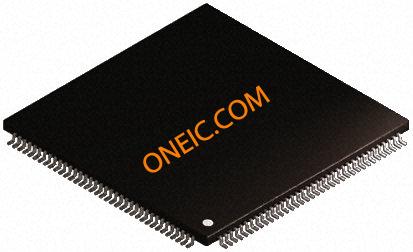
Image Preview

Image Preview