TMS320VC33PGEA120
32-bit floating-point digital signal processors in 144-pin LQFP format
Manufacturer: ti
series introduction
# Introduction to the TMS320VC33PGEA120 Product Series
## 1. Overview
The TMS320VC33PGEA120 belongs to Texas Instruments' TMS320C3x family of digital signal processors (DSPs). This product series is designed to offer high - performance signal processing capabilities for a wide range of applications, from industrial control systems to audio and communication devices. The "TMS320" is the general prefix for Texas Instruments' DSP product line, "VC33" specifically refers to the C33 core architecture, "PGEA" is related to the package and other product - specific features, and "120" indicates the operating frequency of the device, which is 120 MHz.
## 2. Key Features
### 2.1 High - Speed Processing
With a clock speed of 120 MHz, the TMS320VC33PGEA120 can execute instructions at a very high rate. It has a single - cycle instruction execution time for most arithmetic and logical operations, enabling it to handle complex algorithms in real - time. This high - speed processing is crucial for applications such as speech recognition, where large amounts of data need to be processed quickly to provide timely responses.
### 2.2 Floating - Point Arithmetic
One of the standout features of the TMS320VC33PGEA120 is its support for floating - point arithmetic. Floating - point operations are essential for applications that require high precision, such as scientific research, medical imaging, and advanced audio processing. The DSP can perform floating - point addition, subtraction, multiplication, and division efficiently, allowing developers to implement complex mathematical models without the need for extensive integer - based approximations.
### 2.3 Memory Architecture
- **Internal Memory**: The device has a significant amount of on - chip memory, including both program and data memory. This internal memory reduces the need for external memory access, which can be a bottleneck in terms of speed. It allows for faster execution of code and quicker data retrieval, enhancing the overall performance of the system.
- **External Memory Interface**: In addition to the internal memory, the TMS320VC33PGEA120 is equipped with an external memory interface. This interface enables the connection of external memory devices such as RAM and ROM, providing the flexibility to expand the memory capacity as required by the application. It supports different types of memory access modes, allowing for efficient data transfer between the DSP and external memory.
### 2.4 Peripherals
- **Serial Ports**: The DSP features multiple serial ports, including asynchronous serial ports (UARTs) and synchronous serial ports (SPI, I2C). These serial ports are used for communication with other devices, such as sensors, actuators, and other microcontrollers. They support a wide range of baud rates, making it easy to interface with different types of external devices.
- **Timer/Counters**: There are built - in timer/counters that can be used for various purposes, such as generating precise time delays, measuring time intervals, and controlling the frequency of output signals. These timers can be programmed to operate in different modes, providing flexibility for different application requirements.
## 3. Applications
### 3.1 Audio Processing
In the audio industry, the TMS320VC33PGEA120 is well - suited for tasks such as audio mixing, equalization, and noise cancellation. Its high - speed floating - point processing capabilities allow for real - time audio signal manipulation, ensuring high - quality sound output. For example, in professional audio mixing consoles, the DSP can handle multiple audio channels simultaneously, applying different effects and adjustments to each channel.
### 3
Images for reference

144-LQFP
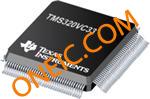
Image Preview

Image Preview