TMS320LF2401AVFA
16-bit microcontrollers and DSPs in compact LQFP packages
Manufacturer: ['analog-devices', 'ti']
series introduction
# Introduction to the TMS320LF2401AVFA Product Series
## 1. Overview
The TMS320LF2401AVFA belongs to the TMS320LF240x family of digital signal processors (DSPs) developed by Texas Instruments. These DSPs are specifically designed to meet the requirements of embedded control applications, offering a powerful combination of high - performance signal processing capabilities and efficient control features. The "TMS320" is the general prefix for Texas Instruments' DSP product line, "LF" indicates low - power operation, "2401" is the specific model number within the 240x series, and "AVFA" represents a particular package and speed grade.
## 2. Key Features
### 2.1 Core Processing Power
- **High - Speed CPU**: The TMS320LF2401AVFA is equipped with a high - performance 16 - bit fixed - point DSP core. It can execute instructions at a clock speed of up to 40 million instructions per second (MIPS). This high processing speed enables it to handle complex algorithms and real - time control tasks efficiently, such as motor control, power electronics, and industrial automation.
- **Harvard Architecture**: It uses a modified Harvard architecture, which features separate program and data memory buses. This allows simultaneous access to program instructions and data, significantly improving the processing throughput compared to traditional von Neumann architectures.
### 2.2 Memory Configuration
- **On - Chip Memory**:
- **Flash Memory**: The device comes with on - chip flash memory, which provides non - volatile storage for program code. The TMS320LF2401AVFA typically has a certain amount of flash memory (e.g., 16K words), allowing developers to store their application programs directly on the chip. This eliminates the need for external memory in many cases, reducing the overall system cost and board space.
- **Data Memory**: It also includes on - chip random - access memory (RAM) for data storage. The RAM is used to store variables, intermediate results, and buffers during program execution. The available RAM size is sufficient for most embedded control applications, enabling efficient data handling.
- **Memory Addressing**: The DSP supports a wide range of memory addressing modes, which provide flexibility in accessing data and program memory. These addressing modes include direct, indirect, and indexed addressing, allowing developers to optimize their code for better performance.
### 2.3 Peripheral Interfaces
#### 2.3.1 Serial Communication Interfaces
- **Serial Peripheral Interface (SPI)**: The TMS320LF2401AVFA features an SPI module, which allows for high - speed serial communication with external devices such as sensors, actuators, or other microcontrollers. The SPI interface operates in master or slave mode, enabling easy integration into various communication systems.
- **Universal Asynchronous Receiver/Transmitter (UART)**: The UART interface provides asynchronous serial communication capabilities, which are commonly used for communication with PCs, modems, or other serial devices. It supports standard baud rates and data formats, making it suitable for a wide range of applications.
#### 2.3.2 Analog - to - Digital Converter (ADC)
- The device is equipped with an on - chip ADC module. The ADC has multiple input channels, allowing it to sample multiple analog signals simultaneously. It typically has a high - resolution (e.g., 10 - bit) and a fast conversion speed, which is essential for applications that require accurate analog signal measurement, such as sensor data acquisition in industrial control systems.
#### 2.3.3 Pulse - Width Modulation (PWM) Modules
- The TMS320LF240
Images for reference

32-LQFP
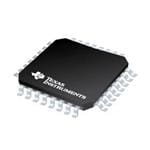
Image Preview
Image Preview