TMS320DM642AZDK7
Fixed-point digital signal processors for video and imaging applications
Manufacturer: ti
series introduction
# Introduction to the TMS320DM642AZDK7 Product Series
## 1. Overview
The TMS320DM642AZDK7 is a part of Texas Instruments' highly regarded TMS320DM64x digital signal processor (DSP) product family. This product series is specifically engineered to address the demanding requirements of high - performance digital media applications. With its advanced architecture and powerful processing capabilities, it has become a popular choice among developers in various industries, including video surveillance, video conferencing, and multimedia entertainment.
## 2. Key Features
### 2.1 High - Performance DSP Core
- **Processing Power**: The TMS320DM642AZDK7 is built around a high - performance C64x+ DSP core. It operates at a clock speed of up to 720 MHz, which enables it to execute a large number of instructions per second. This high processing power allows for real - time processing of complex algorithms, such as video encoding and decoding, image processing, and audio signal processing.
- **Instruction Set**: The C64x+ instruction set architecture is designed to optimize performance for digital media applications. It includes a wide range of instructions for arithmetic operations, data movement, and control flow, which can be efficiently used to implement various algorithms.
### 2.2 Memory Architecture
- **On - Chip Memory**: The device features a significant amount of on - chip memory, including 128K bytes of Level 1 Program Memory (L1P) and 128K bytes of Level 1 Data Memory (L1D). Additionally, it has 1M byte of Level 2 Memory (L2), which can be configured as either cache or general - purpose memory. This on - chip memory reduces the need for external memory access, thereby improving the overall system performance and reducing power consumption.
- **External Memory Interface**: The TMS320DM642AZDK7 is equipped with an external memory interface (EMIF) that supports various types of external memories, such as synchronous dynamic random - access memory (SDRAM) and flash memory. This allows for the expansion of the system's memory capacity to meet the requirements of different applications.
### 2.3 Video and Peripheral Interfaces
- **Video Port**: It has three video ports (VP0, VP1, and VP2) that support a wide range of video formats and standards. These ports can be used for video input and output, enabling the device to interface with video cameras, displays, and other video - related devices. The video ports support features such as progressive and interlaced video, multiple resolutions, and different pixel formats.
- **Peripheral Interfaces**: The product series also includes a variety of other peripheral interfaces, such as Universal Asynchronous Receiver/Transmitter (UART), Serial Peripheral Interface (SPI), and Inter - Integrated Circuit (I2C). These interfaces allow the TMS320DM642AZDK7 to communicate with other devices, such as sensors, actuators, and microcontrollers, expanding its application scope.
### 2.4 Power Management
- **Low - Power Design**: Texas Instruments has implemented advanced power management techniques in the TMS320DM642AZDK7. The device supports multiple power - saving modes, such as idle mode and standby mode, which can significantly reduce power consumption when the device is not fully utilized. This makes it suitable for battery - powered applications and energy - efficient systems.
## 3. Applications
### 3.1 Video Surveillance
- **Video Encoding and Decoding**: In video surveillance systems, the TMS320DM642AZDK7 can be used to encode high - resolution video streams from multiple cameras in real - time
Images for reference
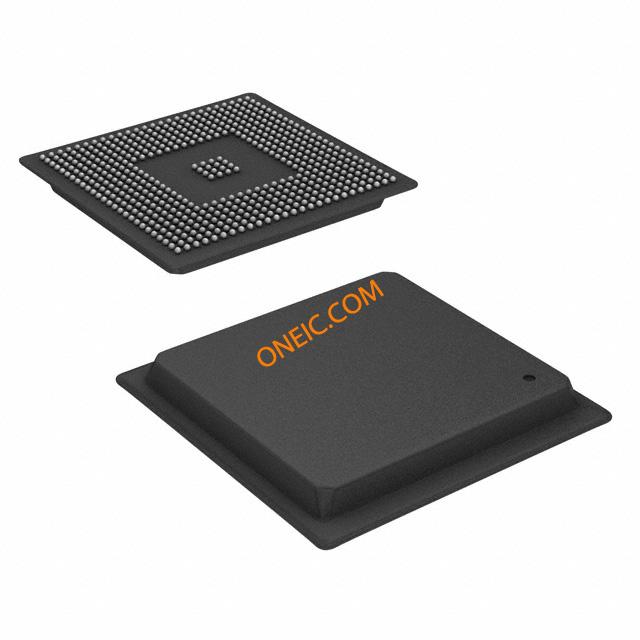
548-FCBGA-ZDK

Image Preview
Image Preview