TMS320DM642AZDK6
High-performance fixed-point DSPs for video and imaging applications
Manufacturer: ['national-semiconductor', 'rochester', 'ti']
series introduction
# Introduction to the TMS320DM642AZDK6 Product Series
## 1. Overview
The TMS320DM642AZDK6 is a remarkable product series within Texas Instruments' digital signal processor (DSP) lineup. It is specifically engineered to address the complex and demanding requirements of high - performance multimedia and video processing applications. With its advanced architecture and powerful features, it has become a go - to solution for developers in various industries.
## 2. Key Features
### 2.1 High - Performance DSP Core
- **Processing Power**: At the heart of the TMS320DM642AZDK6 lies a high - speed TMS320C64x+ DSP core. This core can operate at clock speeds up to 600 MHz, delivering an impressive 4800 million instructions per second (MIPS). Such high processing power enables it to handle complex algorithms and real - time video processing tasks with ease.
- **Instruction Set**: The DSP core features a very long instruction word (VLIW) architecture with a rich instruction set. This includes single - instruction, multiple - data (SIMD) operations, which are highly efficient for multimedia processing. SIMD operations allow the processor to perform the same operation on multiple data elements simultaneously, significantly accelerating tasks such as image filtering and video encoding.
### 2.2 Memory Architecture
- **On - Chip Memory**: The device is equipped with a substantial amount of on - chip memory. It has 32 KB of L1P (Level 1 Program) cache and 32 KB of L1D (Level 1 Data) cache, which provide fast access to frequently used program code and data. Additionally, there is 256 KB of L2 memory that can be configured as either cache or general - purpose memory. This flexible L2 memory configuration allows developers to optimize the memory usage according to the specific requirements of their applications.
- **External Memory Interface**: The TMS320DM642AZDK6 features an external memory interface (EMIF) that supports a variety of external memory types, including synchronous dynamic random - access memory (SDRAM), flash memory, and static random - access memory (SRAM). This enables the device to interface with large - capacity external memories, which is essential for applications that require storing large amounts of video data or program code.
### 2.3 Video and Peripheral Interfaces
- **Video Port**: It comes with three video ports (VP0, VP1, and VP2) that support a wide range of video formats and standards. These ports can be configured as either input or output ports, allowing for seamless integration with video capture devices (such as cameras) and display devices (such as monitors). The video ports support standard video formats like NTSC and PAL, as well as high - definition video formats, making it suitable for both consumer and professional video applications.
- **Other Peripherals**: The product series also includes a variety of other peripherals, such as a universal asynchronous receiver - transmitter (UART), a serial peripheral interface (SPI), and an inter - integrated circuit (I2C) interface. These peripherals enable the device to communicate with other external devices, such as sensors, actuators, and microcontrollers, expanding its application scope.
### 2.4 Power Management
- **Low - Power Operation**: Texas Instruments has implemented advanced power management techniques in the TMS320DM642AZDK6. The device supports multiple power - saving modes, allowing it to reduce power consumption when not performing intensive processing tasks. This is particularly important for battery - powered applications or systems where energy efficiency is a key concern.
## 3. Applications
### 3.1 Video Surveillance
- **Real - Time Monitoring**: In
Images for reference
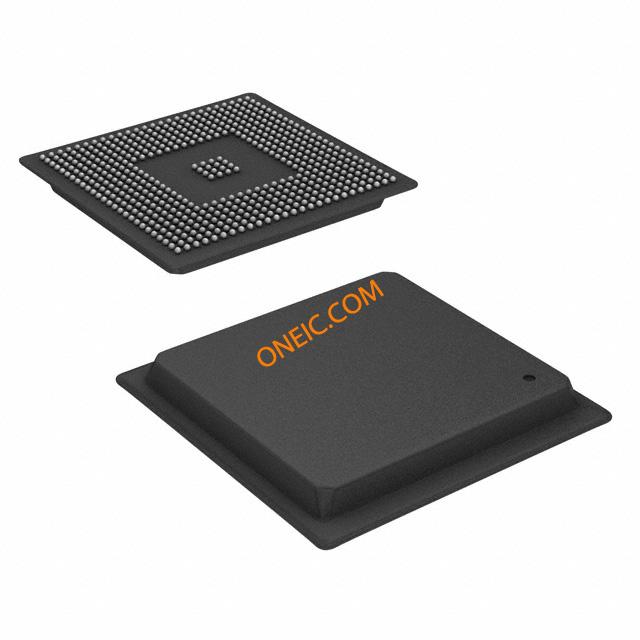
548-FCBGA-ZDK
Image Preview