TMS320C6745BPTPA3
Floating-point digital signal processors for advanced signal processing
Manufacturer: ti
series introduction
# Introduction to the TMS320C6745BPTPA3 Product Series
## 1. Overview
The TMS320C6745BPTPA3 belongs to Texas Instruments' TMS320C674x family of digital signal processors (DSPs). These processors are designed to offer high - performance floating - point and fixed - point processing capabilities, making them suitable for a wide range of applications in various industries.
## 2. Key Features
### 2.1 Processing Power
- **High - Speed CPU**: The TMS320C6745BPTPA3 is equipped with a C674x core that operates at a clock speed of up to 456 MHz. This high - speed operation enables it to handle complex algorithms and data - intensive tasks efficiently.
- **Floating - Point and Fixed - Point Processing**: It supports both floating - point and fixed - point arithmetic operations. Floating - point processing is crucial for applications that require high precision, such as scientific simulations and audio/video processing. Fixed - point processing, on the other hand, is more power - efficient and is suitable for applications where cost and power consumption are major concerns.
### 2.2 Memory
- **Internal Memory**: The device has a significant amount of on - chip memory. It includes 32 KB of Level 1 Program Memory (L1P), 32 KB of Level 1 Data Memory (L1D), and 256 KB of Level 2 Memory (L2). This internal memory reduces the need for external memory access, thereby improving the overall processing speed and reducing power consumption.
- **External Memory Interface**: It also features an external memory interface that supports various types of external memories, such as SDRAM, DDR SDRAM, and Flash memory. This allows for easy expansion of the memory capacity to meet the requirements of different applications.
### 2.3 Peripherals
- **UART (Universal Asynchronous Receiver - Transmitter)**: The TMS320C6745BPTPA3 has multiple UART ports, which are commonly used for serial communication. UARTs are widely used for connecting the DSP to other devices, such as sensors, actuators, and communication modules.
- **SPI (Serial Peripheral Interface)**: The SPI interface provides a high - speed, synchronous serial communication protocol. It is often used for communicating with external devices like EEPROMs, ADCs (Analog - to - Digital Converters), and DACs (Digital - to - Analog Converters).
- **I2C (Inter - Integrated Circuit)**: The I2C interface is a multi - master, multi - slave serial communication protocol. It is useful for connecting low - speed devices, such as sensors and real - time clocks, to the DSP.
- **EMIF (External Memory Interface)**: As mentioned earlier, the EMIF allows the DSP to interface with external memories. It also supports other external devices, such as FPGAs (Field - Programmable Gate Arrays) and ASICs (Application - Specific Integrated Circuits).
### 2.4 Power Management
- **Low - Power Modes**: The TMS320C6745BPTPA3 offers multiple low - power modes, including idle mode and standby mode. In idle mode, the CPU is halted while the peripherals can continue to operate. In standby mode, the power consumption is further reduced by shutting down most of the internal circuits. These low - power modes make the DSP suitable for battery - powered applications.
## 3. Applications
### 3.1 Audio and Video Processing
- **Audio Enhancement**: The high - performance floating - point processing capabilities of the TMS320C6745
Images for reference
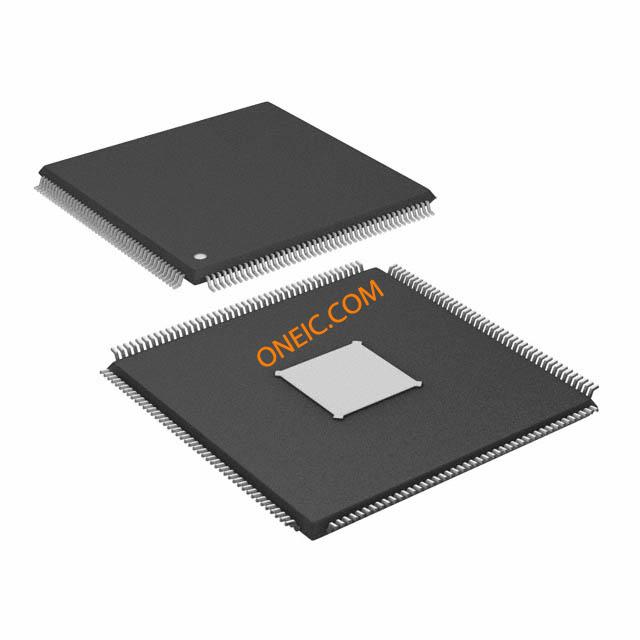
176-LQFP-EP

176-LQFP (exposed pad)

Image Preview