TMS320C6713BPYP200
High-performance 32-bit floating-point DSPs for advanced signal processing
Manufacturer: ti
series introduction
# Introduction to the TMS320C6713BPYP200 Product Series
## 1. Overview
The TMS320C6713BPYP200 belongs to Texas Instruments' TMS320C67x series of digital signal processors (DSPs). These DSPs are designed to offer high - performance processing capabilities for a wide range of applications, from audio and video processing to telecommunications and industrial control. The TMS320C6713BPYP200, in particular, is a powerful device that combines high - speed processing with advanced features to meet the demanding requirements of modern signal processing tasks.
## 2. Key Features
### 2.1 Processing Power
- **High - Speed CPU**: The TMS320C6713BPYP200 is clocked at 200 MHz. This high clock speed enables it to execute a large number of instructions per second, making it suitable for real - time applications that require fast data processing. For example, in audio processing, it can handle complex algorithms such as noise cancellation and audio effects in real - time without introducing significant latency.
- **Floating - Point Unit (FPU)**: It is equipped with a high - performance floating - point unit. Floating - point arithmetic is crucial for applications that deal with a wide range of numerical values, such as scientific simulations, medical imaging, and radar signal processing. The FPU allows the processor to perform accurate calculations with high precision, which is essential for these types of applications.
### 2.2 Memory Architecture
- **On - Chip Memory**: The device has a significant amount of on - chip memory, including both program and data memory. This on - chip memory reduces the need for external memory access, which can improve the overall performance of the system. For instance, in a video processing application, the on - chip memory can store frequently used video frames and processing algorithms, reducing the time spent waiting for data to be fetched from external memory.
- **Memory Interfaces**: It supports various memory interfaces, such as synchronous dynamic random - access memory (SDRAM) and flash memory. This flexibility allows designers to choose the most appropriate memory type for their specific application requirements. For example, SDRAM can be used for high - speed data storage during processing, while flash memory can be used for storing program code and configuration data.
### 2.3 Peripherals
- **Serial Ports**: The TMS320C6713BPYP200 is equipped with multiple serial ports, including UART (Universal Asynchronous Receiver - Transmitter) and SPI (Serial Peripheral Interface). These serial ports enable the device to communicate with other external devices, such as sensors, actuators, and other microcontrollers. For example, in an industrial control system, the UART port can be used to communicate with a human - machine interface (HMI) device, while the SPI port can be used to communicate with a sensor module.
- **Timer Modules**: It has several timer modules that can be used for a variety of purposes, such as generating accurate time delays, measuring time intervals, and controlling the timing of external events. In a motor control application, the timer modules can be used to generate precise pulse - width modulation (PWM) signals to control the speed and direction of the motor.
## 3. Applications
### 3.1 Audio Processing
- **Professional Audio Equipment**: In professional audio mixers and audio effects processors, the TMS320C6713BPYP200 can be used to implement advanced audio algorithms, such as equalization, compression, and reverb. Its high - speed processing and floating - point capabilities allow for real - time audio processing with high quality and low latency.
- **Consumer Audio Devices
Images for reference

208-LQFP (exposed pad)
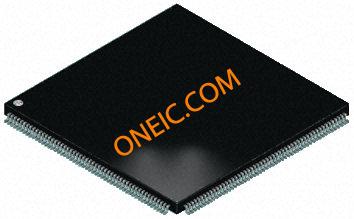
Image Preview
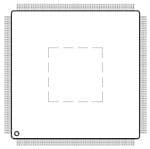
Image Preview