TMS320C6701GJC150
32-bit floating-point digital signal processors for high-speed applications
Manufacturer: ['rochester', 'ti']
series introduction
# Introduction to the TMS320C6701GJC150 Product Series
## 1. Overview
The TMS320C6701GJC150 belongs to Texas Instruments' TMS320C67x family of digital signal processors (DSPs). These processors are designed to meet the high - performance requirements of a wide range of applications, from telecommunications and audio processing to industrial control and medical imaging. The TMS320C6701GJC150, in particular, offers a unique combination of high - speed processing capabilities, advanced floating - point performance, and a rich set of on - chip peripherals.
## 2. Key Features
### 2.1 Processing Power
- **High - Speed CPU**: The TMS320C6701GJC150 is clocked at 150 MHz, which enables it to execute a large number of instructions per second. This high clock speed allows for real - time processing of complex algorithms, making it suitable for applications where quick response times are crucial.
- **VLIW Architecture**: It utilizes a Very Long Instruction Word (VLIW) architecture. This architecture allows the processor to issue multiple instructions simultaneously in a single clock cycle. For example, it can perform multiple arithmetic and logical operations at once, significantly enhancing the overall processing throughput.
### 2.2 Floating - Point Performance
- **Floating - Point Unit (FPU)**: One of the standout features of the TMS320C6701GJC150 is its powerful floating - point unit. Floating - point arithmetic is essential for applications that deal with scientific and engineering calculations, such as signal processing algorithms that require high precision. The FPU can perform operations like addition, subtraction, multiplication, and division on floating - point numbers with high accuracy and speed.
- **IEEE 754 Compliance**: The FPU adheres to the IEEE 754 standard for floating - point arithmetic. This ensures compatibility with a wide range of software libraries and programming languages, making it easier for developers to port existing code and develop new applications.
### 2.3 Memory and Storage
- **On - Chip Memory**: The processor comes with a significant amount of on - chip memory, including both program and data memory. This on - chip memory reduces the need for external memory access, which can be a bottleneck in performance. It allows for faster data retrieval and storage, enabling the processor to execute instructions more efficiently.
- **External Memory Interface**: In addition to the on - chip memory, the TMS320C6701GJC150 has an external memory interface. This interface supports various types of external memory, such as synchronous dynamic random - access memory (SDRAM) and flash memory. It provides the flexibility to expand the memory capacity as per the requirements of the application.
### 2.4 Peripherals
- **Serial Communication Interfaces**: The product series includes multiple serial communication interfaces, such as UART (Universal Asynchronous Receiver - Transmitter), SPI (Serial Peripheral Interface), and I²C (Inter - Integrated Circuit). These interfaces enable the processor to communicate with other devices, such as sensors, actuators, and other microcontrollers, facilitating data exchange and system integration.
- **Timer Modules**: There are several timer modules on the chip. These timers can be used for a variety of purposes, such as generating accurate time delays, measuring time intervals, and controlling the timing of external events. They are essential for applications that require precise timing, such as motor control and data acquisition systems.
## 3. Applications
### 3.1 Telecommunications
- **Base Station Signal Processing**: In wireless base stations, the TMS320C67
Images for reference
.jpg)
352-FCBGA

Image Preview
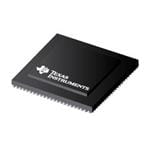
Image Preview