TMS320C5505AZCH10
Fixed-point digital signal processors for high-speed computing applications
Manufacturer: ti
series introduction
# Introduction to the TMS320C5505AZCH10 Product Series
## 1. Overview
The TMS320C5505AZCH10 belongs to Texas Instruments' TMS320C55x series of digital signal processors (DSPs). This product series is renowned for its high - performance, low - power consumption, and versatility, making it an ideal choice for a wide range of applications in the fields of audio processing, industrial control, and portable devices.
## 2. Key Features
### 2.1 Processing Power
- **Core Architecture**: The TMS320C5505AZCH10 is based on a fixed - point DSP core. It operates at a clock speed of up to 100 MHz, which enables it to execute a large number of instructions per second. This high - speed processing capability allows for real - time signal processing tasks, such as filtering, Fourier transforms, and audio encoding/decoding.
- **Instruction Set**: It features a rich instruction set that includes single - cycle multiply - accumulate (MAC) operations. MAC operations are fundamental in digital signal processing as they are used extensively in algorithms like convolution and correlation. The single - cycle execution of these operations significantly enhances the overall processing efficiency.
### 2.2 Low Power Consumption
- **Power Management Modes**: The device offers multiple power management modes, including active, idle, and standby modes. In idle mode, the CPU can be put to sleep while peripheral functions continue to operate, conserving power. In standby mode, the power consumption is further reduced, making it suitable for battery - powered applications.
- **Dynamic Voltage and Frequency Scaling (DVFS)**: The TMS320C5505AZCH10 supports DVFS, which allows the processor to adjust its voltage and frequency according to the workload. When the processing requirements are low, the voltage and frequency can be decreased, resulting in lower power consumption without sacrificing performance.
### 2.3 Memory Configuration
- **Internal Memory**: It is equipped with on - chip memory, including 64 KB of single - access data RAM (SARAM) and 128 KB of program flash memory. The SARAM provides fast access to data, reducing the time required for data retrieval during processing. The flash memory can be used to store the program code, eliminating the need for an external memory device in some applications.
- **External Memory Interface**: The DSP also features an external memory interface (EMIF), which allows it to interface with external memory devices such as SRAM, SDRAM, and flash memory. This expandability enables the device to handle larger data sets and more complex applications.
### 2.4 Peripherals
- **UART (Universal Asynchronous Receiver - Transmitter)**: The UART peripheral enables serial communication with other devices, such as microcontrollers, computers, or sensors. It supports various baud rates and data formats, making it easy to integrate the TMS320C5505AZCH10 into existing communication systems.
- **SPI (Serial Peripheral Interface)**: The SPI interface provides a high - speed, synchronous serial communication link. It is commonly used to communicate with external devices such as ADCs (Analog - to - Digital Converters), DACs (Digital - to - Analog Converters), and EEPROMs.
- **I2C (Inter - Integrated Circuit)**: The I2C interface allows the DSP to communicate with other I2C - compatible devices in a multi - master or multi - slave configuration. This is useful for connecting to sensors, displays, and other peripheral devices.
- **Timer Modules**: The device has multiple timer modules that can be used for various purposes, such as generating time - based interrupts
Images for reference
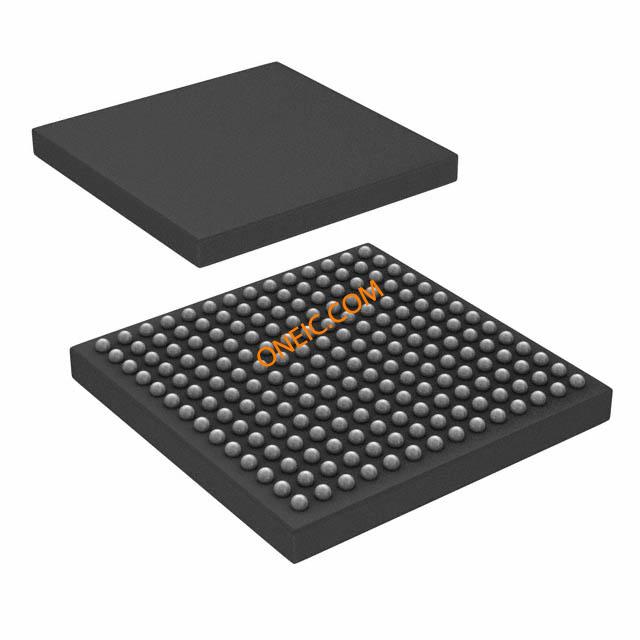
196-NFBGA
Image Preview