TLC2274AMDREP
General-purpose rail-to-rail operational amplifiers in 14-pin SOIC packages
Manufacturer: ['rochester', 'analog-devices', 'ti']
series introduction
# TLC2274AMDREP Product Series Introduction
## 1. Overview
The TLC2274AMDREP is a part of Texas Instruments' high - performance operational amplifier product series. Operational amplifiers, commonly known as op - amps, are fundamental building blocks in analog circuit design. The TLC2274AMDREP offers a range of features that make it suitable for a wide variety of applications, from sensor signal conditioning to audio processing.
## 2. Key Features
### 2.1 Low Input Bias Current
One of the standout features of the TLC2274AMDREP is its extremely low input bias current. This characteristic is crucial when dealing with high - impedance sources. In applications such as photodiode amplifiers or electrometer circuits, where the source impedance can be in the mega - ohm or even giga - ohm range, a low input bias current ensures that the op - amp does not load the source significantly. This results in accurate signal amplification without introducing large errors due to current flowing into or out of the input terminals.
### 2.2 Rail - to - Rail Output
The TLC2274AMDREP provides rail - to - rail output swing. This means that the output voltage of the op - amp can reach very close to the positive and negative power supply voltages. In systems where the full range of the power supply voltage needs to be utilized, such as in battery - powered devices or systems with limited voltage headroom, rail - to - rail output is highly advantageous. It allows for maximum utilization of the available voltage range, enabling more efficient and accurate signal processing.
### 2.3 Low Noise
Noise is an unwanted signal that can degrade the quality of the amplified signal. The TLC2274AMDREP is designed to have low noise characteristics. In audio applications, for example, low noise is essential to ensure that the amplified audio signal is clean and free from unwanted hiss or distortion. In sensor applications, low noise helps in accurately detecting and amplifying weak sensor signals, improving the overall signal - to - noise ratio of the system.
### 2.4 High Slew Rate
The slew rate of an op - amp is defined as the maximum rate of change of the output voltage. The TLC2274AMDREP has a relatively high slew rate, which allows it to handle fast - changing input signals. In applications such as video signal processing or high - frequency communication systems, a high slew rate is necessary to accurately reproduce the input signal without distortion. It ensures that the op - amp can quickly respond to rapid changes in the input voltage, maintaining the integrity of the signal.
## 3. Package and Pinout
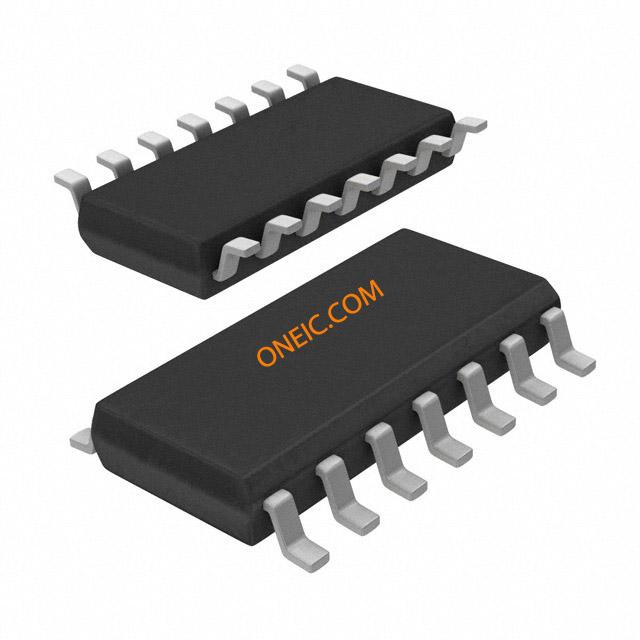
The TLC2274AMDREP comes in a specific package that offers ease of use and compatibility with standard printed circuit board (PCB) designs. It is typically available in a small - outline integrated circuit (SOIC) package. The pinout of the device is designed to follow industry - standard conventions, making it straightforward to integrate into existing circuit designs. The pins are clearly labeled for power supply connections (positive and negative power rails), input terminals (inverting and non - inverting), and output terminal. This standardization simplifies the design process and reduces the chances of errors during PCB layout.
## 4. Electrical Specifications
### 4.1 Power Supply Range
The TLC2274AMDREP can operate over a wide range of power supply voltages. It can typically handle power supply voltages from ±2.25V to ±18V. This wide power supply range makes it suitable for a variety of applications, from low - voltage battery - powered devices to higher - voltage industrial systems. Designers can choose the appropriate power supply voltage based on the specific requirements of their application, providing flexibility in system design.
### 4.2 Gain
Images for reference

14-SOIC
14-TSSOPa
Image Preview