STM32F407VGT7
High-performance 32-bit ARM Cortex-M4 microcontrollers with 1MB flash memory
Manufacturer: stm
series introduction
# Introduction to the STM32F407VGT7 Product Series
## 1. Overview
The STM32F407VGT7 belongs to the STM32F4 series of microcontrollers developed by STMicroelectronics. This series is renowned for its high - performance, low - power consumption, and rich set of integrated peripherals, making it suitable for a wide range of applications in various industries.
## 2. Core and Architecture
### 2.1 ARM Cortex - M4 Core
The STM32F407VGT7 is powered by the ARM Cortex - M4 core with a floating - point unit (FPU). The Cortex - M4 core offers a high level of processing performance, with a maximum operating frequency of up to 168 MHz. The FPU enables efficient handling of floating - point arithmetic operations, which is crucial for applications such as signal processing, motor control, and sensor data analysis.
### 2.2 Memory Architecture
- **Flash Memory**: It is equipped with 1 MB of on - chip flash memory. This large - capacity flash memory allows developers to store complex application code, including firmware updates, algorithms, and data tables. The flash memory has a high - speed access time, ensuring fast execution of instructions.
- **SRAM**: The microcontroller features 192 KB of static random - access memory (SRAM). SRAM provides fast data storage and access, which is essential for storing variables, buffers, and intermediate results during program execution. It helps in reducing the overall execution time of the application.
## 3. Peripherals
### 3.1 Communication Interfaces
- **USB**: The STM32F407VGT7 supports USB 2.0 full - speed interface. This allows the microcontroller to communicate with a wide range of USB - enabled devices, such as computers, smartphones, and USB peripherals. It can be used for data transfer, device configuration, and power management.
- **Ethernet**: It has an integrated Ethernet MAC (Media Access Controller) with a dedicated DMA (Direct Memory Access) controller. This enables the microcontroller to connect to local area networks (LANs) and communicate using Ethernet protocols. It is suitable for applications such as industrial networking, home automation, and remote monitoring.
- **SPI, I2C, and UART**: Multiple Serial Peripheral Interface (SPI), Inter - Integrated Circuit (I2C), and Universal Asynchronous Receiver - Transmitter (UART) interfaces are available. These interfaces are commonly used for communicating with external sensors, actuators, and other microcontrollers. For example, SPI can be used to communicate with high - speed sensors, while I2C is suitable for low - speed, multi - master communication.
### 3.2 Timers
- **Advanced - control Timers**: There are advanced - control timers that can be used for applications such as motor control. These timers can generate precise pulse - width modulation (PWM) signals with high resolution, which is essential for controlling the speed and torque of motors.
- **General - purpose Timers**: General - purpose timers are available for tasks such as event counting, time measurement, and generating basic PWM signals. They can be used in a variety of applications, including sensor data acquisition and simple control systems.
### 3.3 Analog - to - Digital Converters (ADCs)
The microcontroller is equipped with multiple ADCs. These ADCs have a high resolution (up to 12 - bit) and a fast conversion rate. They can be used to convert analog signals from sensors, such as temperature sensors, pressure sensors, and light sensors, into digital values for further processing by the microcontroller.
### 3.4 Digital - to - Analog Conver
Images for reference

100-LQFP
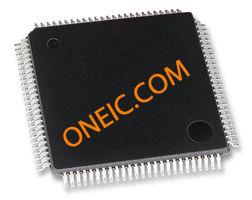
Image Preview
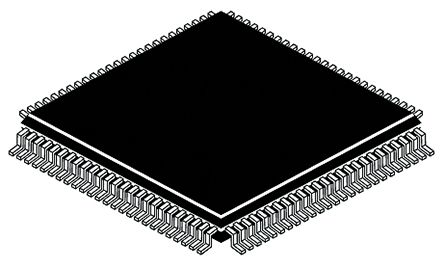
Image Preview