STM32F407VGT6
32-bit ARM Cortex-M4 microcontrollers with 1MB flash, 168MHz, LQFP-100 package
Manufacturer: stm
series introduction
# Introduction to the STM32F407VGT6 Product Series
## 1. Overview
The STM32F407VGT6 is a high - performance microcontroller belonging to the STM32F4 series developed by STMicroelectronics. It is built on the ARM Cortex - M4 core with a floating - point unit (FPU), which combines high computing power with advanced peripheral features. This makes it an ideal choice for a wide range of applications, from industrial control systems to consumer electronics.
## 2. Key Features
### 2.1 Core and Performance
- **ARM Cortex - M4 Core**: The STM32F407VGT6 is powered by an ARM Cortex - M4 core running at a maximum frequency of 168 MHz. The Cortex - M4 architecture offers a high - performance solution with a 32 - bit instruction set, enabling efficient processing of complex algorithms.
- **Floating - Point Unit (FPU)**: The integrated FPU allows for fast and accurate floating - point arithmetic operations. This is particularly useful in applications such as signal processing, motor control, and scientific computing, where floating - point calculations are common.
- **Memory Protection Unit (MPU)**: The MPU provides a hardware - based memory protection mechanism. It allows the user to define memory regions with different access permissions, enhancing the security and reliability of the system by preventing unauthorized access to critical memory areas.
### 2.2 Memory
- **Flash Memory**: It comes with 1 MB of on - chip flash memory. Flash memory is non - volatile, which means it retains data even when the power is turned off. This large amount of flash memory can be used to store the program code, allowing for the implementation of complex applications.
- **SRAM**: The microcontroller has 192 KB of static random - access memory (SRAM). SRAM provides fast access to data, which is crucial for storing variables, buffers, and intermediate results during program execution.
### 2.3 Peripherals
#### 2.3.1 Communication Peripherals
- **USB**: It supports USB 2.0 full - speed (12 Mbps) and device/host/OTG functionality. This allows the microcontroller to communicate with a wide range of USB - enabled devices, such as computers, smartphones, and USB sensors.
- **Ethernet**: The integrated Ethernet MAC (Media Access Controller) supports 10/100 Mbps Ethernet communication. It enables the microcontroller to be connected to local area networks (LANs), making it suitable for applications such as industrial networking, home automation, and Internet of Things (IoT) devices.
- **CAN**: The Controller Area Network (CAN) interface is available, which is widely used in automotive and industrial applications for reliable communication between different nodes in a network. It supports both CAN 2.0A and CAN 2.0B protocols.
- **UART, SPI, and I2C**: Multiple Universal Asynchronous Receiver - Transmitter (UART), Serial Peripheral Interface (SPI), and Inter - Integrated Circuit (I2C) interfaces are provided. These interfaces are commonly used for communication with external devices such as sensors, displays, and other microcontrollers.
#### 2.3.2 Timers
- **Advanced - Control Timers**: There are several advanced - control timers, which can be used for applications such as motor control, pulse - width modulation (PWM) generation, and high - precision timing. These timers offer features like dead - time insertion, complementary outputs, and break inputs, making them suitable for driving power electronics devices.
- **General - Purpose Timers**: A number of general - purpose timers are available for tasks such as event counting, time
Images for reference

100-LQFP
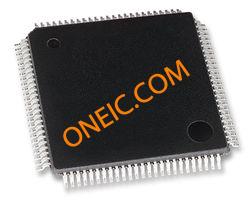
Image Preview

Image Preview