STM32F407VET6
32-bit ARM Cortex M4 microcontrollers with 512KB flash memory
Manufacturer: stm
series introduction
# Introduction to the STM32F407VET6 Product Series
## 1. Overview
The STM32F407VET6 is a high - performance microcontroller belonging to the STM32F4 series developed by STMicroelectronics. It is built on the ARM Cortex - M4 core with a floating - point unit (FPU), which combines high computing power with energy efficiency, making it suitable for a wide range of applications in industrial control, consumer electronics, automotive electronics, and more.
## 2. Key Features
### 2.1 Core and Performance
- **ARM Cortex - M4 Core**: The ARM Cortex - M4 core at the heart of the STM32F407VET6 offers a high - performance 32 - bit RISC architecture. It can operate at a maximum frequency of 168 MHz, providing a high processing speed for complex algorithms and real - time tasks.
- **Floating - Point Unit (FPU)**: The integrated FPU allows for efficient floating - point arithmetic operations. This is particularly useful in applications such as signal processing, motor control, and scientific computing, where floating - point calculations are common.
### 2.2 Memory
- **Flash Memory**: It is equipped with 512 KB of on - chip flash memory. This non - volatile memory is used to store the program code, allowing the microcontroller to retain its functionality even when the power is turned off. The large flash memory capacity enables the implementation of complex applications with extensive code.
- **SRAM**: The STM32F407VET6 has 64 KB of static random - access memory (SRAM). SRAM is used for storing data during the execution of the program, such as variables, buffers, and stack space. The sufficient SRAM capacity ensures smooth operation of the application.
### 2.3 Peripherals
#### 2.3.1 Communication Interfaces
- **USB**: It supports USB 2.0 full - speed interface, which can be used for data transfer between the microcontroller and other USB - enabled devices, such as computers, smartphones, or USB peripherals. This makes it easy to develop applications for data logging, device control, and human - machine interfaces.
- **SPI**: The Serial Peripheral Interface (SPI) is a high - speed serial communication protocol. The STM32F407VET6 has multiple SPI interfaces, which can be used to communicate with external devices such as sensors, displays, and memory chips.
- **I2C**: The Inter - Integrated Circuit (I2C) interface is a widely used serial communication protocol for connecting low - speed devices. It allows the microcontroller to communicate with various I2C - compatible sensors, EEPROMs, and other devices in a multi - master or multi - slave configuration.
- **UART/USART**: Universal Asynchronous Receiver/Transmitter (UART) and Universal Synchronous/Asynchronous Receiver/Transmitter (USART) interfaces are available for asynchronous serial communication. They are commonly used for communication with other microcontrollers, modems, and serial - based sensors.
#### 2.3.2 Timers
- **Advanced - control Timers**: The microcontroller is equipped with advanced - control timers, which can be used for applications such as motor control, PWM generation, and high - precision timing. These timers can generate complex waveforms with high accuracy, making them suitable for controlling stepper motors, servo motors, and brushless DC motors.
- **General - purpose Timers**: There are also general - purpose timers available, which can be used for tasks such as event counting, time measurement, and basic PWM generation.
#### 2.3.3 Analog - to
Images for reference

100-LQFP
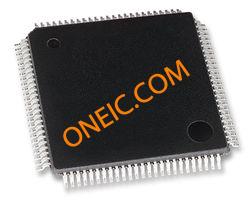
Image Preview
Image Preview