STM32F103ZGT6
32-bit ARM Cortex M3 microcontrollers with 1MB flash, 144-pin LQFP
Manufacturer: stm
series introduction
# Introduction to the STM32F103ZGT6 Product Series
## 1. Overview
The STM32F103ZGT6 belongs to the STM32F1 series of microcontrollers developed by STMicroelectronics. This series is based on the ARM Cortex - M3 32 - bit RISC core, which combines high performance, low power consumption, and rich peripheral features. The STM32F103ZGT6, in particular, is a high - end member of the STM32F103 family, offering a wide range of capabilities suitable for various industrial, consumer, and automotive applications.
## 2. Key Features
### 2.1 Core and Performance
- **ARM Cortex - M3 Core**: The ARM Cortex - M3 core provides a high - performance processing platform with a 32 - bit architecture. It features a Harvard architecture with separate instruction and data buses, allowing for simultaneous access to instructions and data, which significantly improves the processing speed. The core operates at a maximum frequency of 72 MHz, enabling it to handle complex tasks efficiently.
- **High - Speed Processing**: With a high clock speed and efficient instruction set, the STM32F103ZGT6 can execute instructions quickly. It has a single - cycle multiplication and hardware division unit, which speeds up mathematical operations commonly used in signal processing, control algorithms, and other applications.
### 2.2 Memory
- **Flash Memory**: The STM32F103ZGT6 is equipped with 1024 KB of embedded Flash memory. This non - volatile memory is used to store the program code, allowing the microcontroller to retain its functionality even when the power is turned off. The Flash memory has a high - speed access time, which enables fast code execution.
- **SRAM**: It also has 96 KB of static random - access memory (SRAM). SRAM is used for storing data during program execution, such as variables, buffers, and stack space. The large SRAM capacity allows for the implementation of complex algorithms and the handling of large amounts of data.
### 2.3 Peripherals
#### 2.3.1 Communication Interfaces
- **USB**: The microcontroller features a full - speed USB 2.0 device interface. This interface can be used to establish communication with a host computer or other USB - enabled devices, enabling functions such as data transfer, device configuration, and firmware updates.
- **UART/SPI/I2C**: It has multiple universal asynchronous receiver - transmitter (UART), serial peripheral interface (SPI), and inter - integrated circuit (I2C) interfaces. UART is commonly used for serial communication with other devices, such as sensors, displays, and modems. SPI is a high - speed serial communication protocol suitable for short - distance communication between chips, while I2C is a multi - master, multi - slave serial communication protocol often used for connecting low - speed devices.
- **CAN**: The STM32F103ZGT6 includes a controller area network (CAN) interface. CAN is a serial communication protocol widely used in automotive and industrial applications for reliable data transmission between multiple nodes in a network.
#### 2.3.2 Timers
- **General - Purpose Timers**: There are multiple general - purpose timers available, which can be used for a variety of applications, such as generating PWM signals for motor control, measuring time intervals, and counting events.
- **Advanced - Control Timers**: The advanced - control timers offer additional features, such as complementary PWM outputs with dead - time insertion, which are essential for applications like three - phase motor control.
#### 2.3.3 Analog - to - Digital Converter (ADC
Images for reference

144-LQFP
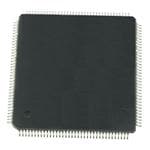
Image Preview
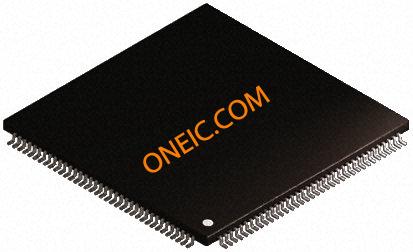
Image Preview