STM32F103ZFH6TR
32-bit ARM Cortex M3 microcontrollers with 768KB flash memory
Manufacturer: stm
series introduction
# Introduction to the STM32F103ZFH6TR Product Series
## 1. Overview
The STM32F103ZFH6TR belongs to the STM32F103 series of microcontrollers developed by STMicroelectronics. This series is based on the ARM Cortex - M3 32 - bit RISC core, which offers a high - performance, low - power solution for a wide range of embedded applications. The STM32F103ZFH6TR, in particular, is designed to meet the requirements of complex projects that demand a combination of processing power, memory, and connectivity.
## 2. Key Features
### 2.1 Core and Performance
- **ARM Cortex - M3 Core**: The ARM Cortex - M3 core at the heart of the STM32F103ZFH6TR provides a high - performance computing platform. It features a 32 - bit architecture with a Harvard architecture and a Thumb - 2 instruction set, which allows for efficient code execution and reduced memory footprint. The core can operate at a maximum frequency of up to 72 MHz, enabling fast data processing and real - time response.
- **Memory Protection Unit (MPU)**: The MPU in the Cortex - M3 core provides a hardware - based memory protection mechanism. It allows the developer to define memory regions with different access permissions, enhancing the security and reliability of the system. This is particularly useful in applications where multiple software components need to be isolated from each other.
### 2.2 Memory
- **Flash Memory**: The STM32F103ZFH6TR is equipped with 1024 KB of embedded Flash memory. This non - volatile memory is used to store the program code of the microcontroller. The large Flash memory capacity enables the implementation of complex algorithms and applications, such as industrial control systems, consumer electronics, and automotive applications.
- **SRAM**: It has 96 KB of static random - access memory (SRAM). SRAM is used for storing data during the execution of the program, such as variables, buffers, and stack. The relatively large SRAM size allows for efficient data handling and processing, reducing the need for external memory in many applications.
### 2.3 Peripherals
- **GPIO (General - Purpose Input/Output)**: The microcontroller offers a large number of GPIO pins. These pins can be configured as either input or output, and they can be used for a variety of purposes, such as connecting sensors, actuators, and external devices. The GPIO pins support different drive strengths and pull - up/down resistors, providing flexibility in circuit design.
- **UART (Universal Asynchronous Receiver - Transmitter)**: Multiple UART interfaces are available, which are commonly used for serial communication. UARTs can be used to communicate with other microcontrollers, sensors, or communication modules, such as Bluetooth or Wi - Fi modules. They support different baud rates and data formats, making them suitable for a wide range of communication requirements.
- **SPI (Serial Peripheral Interface)**: The SPI interface provides a high - speed serial communication protocol. It is often used to communicate with external devices such as flash memories, sensors, and displays. The SPI interface supports full - duplex communication and can operate at high clock frequencies, enabling fast data transfer.
- **I2C (Inter - Integrated Circuit)**: The I2C interface is a widely used serial communication protocol for connecting low - speed devices. It allows multiple devices to be connected to the same bus, reducing the number of wires required in the circuit. The I2C interface in the STM32F103ZFH6TR supports both master and slave modes, making it suitable for a variety
Images for reference

144-LQFP
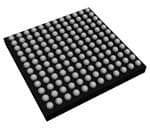
Image Preview