STM32F103ZF
32-bit ARM Cortex M3 microcontrollers with 768KB flash memory
Manufacturer: stm
series introduction
# Introduction to the STM32F103ZF Product Series
## 1. Overview
The STM32F103ZF is part of STMicroelectronics' popular STM32F103 series, which belongs to the ARM® Cortex® - M3 32 - bit microcontroller family. These microcontrollers are designed to offer high - performance, low - power, and cost - effective solutions for a wide range of embedded applications. The STM32F103ZF variant, in particular, stands out with its rich set of features and capabilities, making it a top choice for many developers.
## 2. Key Features
### 2.1 Core and Performance
- **ARM Cortex - M3 Core**: The STM32F103ZF is powered by the ARM Cortex - M3 core, which provides a high - performance 32 - bit RISC architecture. It offers a Harvard architecture with separate instruction and data buses, enabling efficient data processing. The core can operate at a maximum frequency of 72 MHz, delivering up to 1.25 DMIPS/MHz, which means it can execute complex algorithms and tasks with ease.
- **Memory Protection Unit (MPU)**: The built - in MPU allows for the protection of different memory regions, enhancing the security and reliability of the system. It can prevent unauthorized access to critical memory areas, which is crucial in applications where data integrity is of utmost importance.
### 2.2 Memory
- **Flash Memory**: The STM32F103ZF comes with 512 KB of on - chip flash memory. This non - volatile memory is used to store the program code, allowing developers to implement complex applications. The flash memory has a high - endurance rating, ensuring that the stored code remains intact over a long period of time.
- **SRAM**: It is equipped with 64 KB of static random - access memory (SRAM). SRAM provides fast access to data, which is essential for storing variables, buffers, and intermediate results during program execution. This large SRAM size enables the implementation of more complex algorithms and data - intensive applications.
### 2.3 Peripherals
#### 2.3.1 Communication Peripherals
- **USART (Universal Synchronous/Asynchronous Receiver/Transmitter)**: There are multiple USART interfaces available, which support both synchronous and asynchronous communication. They can be used for serial communication with other devices such as sensors, displays, and communication modules. The USARTs support a wide range of baud rates, making them compatible with various external devices.
- **SPI (Serial Peripheral Interface)**: The SPI interfaces offer high - speed serial communication between the microcontroller and other SPI - compatible devices. They are commonly used for communicating with external memory chips, sensors, and display controllers. The SPI protocol allows for full - duplex communication, enabling fast data transfer.
- **I2C (Inter - Integrated Circuit)**: The I2C interfaces provide a simple and efficient way to communicate with other I2C - enabled devices. They are widely used for connecting low - speed sensors, EEPROMs, and other peripheral devices. The I2C protocol uses a two - wire interface, which simplifies the hardware design.
#### 2.3.2 Timers
- **General - Purpose Timers**: The STM32F103ZF has multiple general - purpose timers, which can be used for a variety of applications such as pulse width modulation (PWM), input capture, and output compare. PWM is commonly used for controlling the speed of motors, adjusting the brightness of LEDs, and generating analog signals.
- **Advanced - Control Timers**: These timers offer more advanced features, such as complementary PWM outputs with dead -
Images for reference

144-LQFP
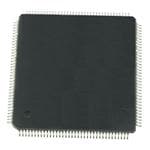
Image Preview
Image Preview