STM32F103ZCT6
32-bit ARM Cortex-M3 microcontrollers with 256KB Flash, 144-pin LQFP
Manufacturer: stm
series introduction
# Introduction to the STM32F103ZCT6 Product Series
## 1. Overview
The STM32F103ZCT6 belongs to the STM32F1 series of microcontrollers developed by STMicroelectronics. This series is based on the ARM Cortex - M3 32 - bit RISC core, which combines high performance, low power consumption, and rich peripheral interfaces. The STM32F103ZCT6 is specifically designed to meet the requirements of a wide range of applications, from industrial control to consumer electronics.
## 2. Key Features
### 2.1 Core and Performance
- **ARM Cortex - M3 Core**: The ARM Cortex - M3 core provides a high - performance processing platform with a Harvard architecture and a 3 - stage pipeline. It can execute instructions at a maximum frequency of 72 MHz, offering excellent computational capabilities for complex tasks.
- **High - Speed Processing**: With a single - cycle multiplication and hardware division unit, the STM32F103ZCT6 can perform arithmetic operations quickly, enabling efficient data processing and algorithm execution.
### 2.2 Memory
- **Flash Memory**: It is equipped with 256 KB of on - chip Flash memory, which can be used to store the program code. This large - capacity Flash allows developers to implement complex applications and store necessary data.
- **SRAM**: The microcontroller has 48 KB of on - chip SRAM, providing sufficient space for data storage during program execution, such as variables, buffers, and stack space.
### 2.3 Peripheral Interfaces
#### 2.3.1 Communication Interfaces
- **UART (Universal Asynchronous Receiver - Transmitter)**: Multiple UART interfaces are available, which are commonly used for serial communication with other devices, such as sensors, displays, and communication modules. They support various baud rates and can be configured for full - duplex or half - duplex communication.
- **SPI (Serial Peripheral Interface)**: The SPI interface enables high - speed serial communication between the microcontroller and external devices, such as flash memories, sensors, and LCD drivers. It supports multiple master - slave configurations and can achieve data transfer rates up to several megabits per second.
- **I2C (Inter - Integrated Circuit)**: The I2C interface is used for short - distance, multi - master, multi - slave communication. It is widely used for connecting low - speed devices, such as EEPROMs, temperature sensors, and real - time clocks.
- **USB (Universal Serial Bus)**: The built - in USB interface allows the microcontroller to communicate with a host computer or other USB - enabled devices. It supports USB 2.0 full - speed mode (12 Mbps), facilitating easy data transfer and device connection.
#### 2.3.2 Timers
- **General - Purpose Timers**: There are multiple general - purpose timers available, which can be used for a variety of applications, such as PWM (Pulse Width Modulation) generation, frequency measurement, and event counting. These timers can be configured to generate accurate pulses with different duty cycles and frequencies.
- **Advanced - Control Timers**: The advanced - control timers offer more advanced features, such as complementary PWM outputs with dead - time insertion, which are suitable for motor control applications.
#### 2.3.3 Analog - to - Digital Converter (ADC)
- **12 - bit ADC**: The STM32F103ZCT6 is equipped with a 12 - bit ADC, which can convert analog signals into digital values with high precision. It has multiple input channels, allowing it to sample multiple analog signals simultaneously, making it suitable for applications such as sensor
Images for reference

144-LQFP
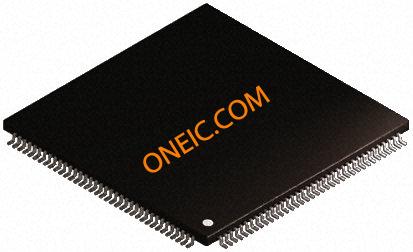
Image Preview
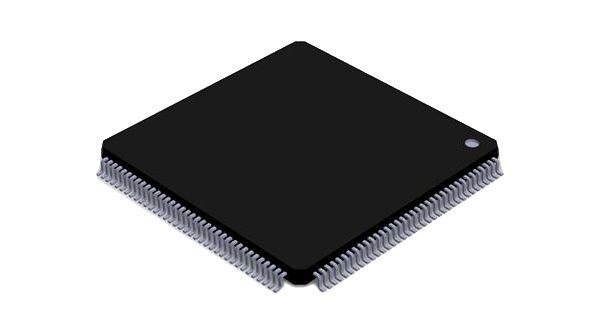
Image Preview