STM32F103VF
32-bit ARM Cortex M3 microcontrollers with 768KB flash memory in 100-pin LQFP package
Manufacturer: stm
series introduction
# Introduction to the STM32F103VF Product Series
## 1. Overview
The STM32F103VF is part of STMicroelectronics' popular STM32F103 series, which belongs to the ARM® Cortex® - M3 32 - bit microcontroller family. These microcontrollers are designed to offer a high - performance, cost - effective, and energy - efficient solution for a wide range of embedded applications. The STM32F103VF variant, in particular, comes with a set of features that make it suitable for various industrial, consumer, and automotive applications.
## 2. Key Features
### 2.1 Core and Performance
- **ARM Cortex - M3 Core**: The STM32F103VF is powered by the ARM Cortex - M3 core, which provides a high - performance 32 - bit RISC architecture. It offers a Harvard architecture with separate instruction and data buses, enabling efficient execution of instructions. The core supports a Thumb - 2 instruction set, which combines the code density of Thumb instructions with the performance of ARM instructions.
- **High Clock Speed**: It can operate at a maximum clock speed of up to 72 MHz, allowing for fast processing of complex tasks. This high clock speed enables the microcontroller to handle real - time applications such as motor control, data acquisition, and communication protocols.
### 2.2 Memory
- **Flash Memory**: The STM32F103VF is equipped with 1 MB of embedded Flash memory. This non - volatile memory is used to store the program code, allowing developers to write and store their applications. The large Flash memory capacity enables the implementation of complex algorithms and applications with a significant amount of code.
- **SRAM**: It has 64 KB of static random - access memory (SRAM). SRAM is used for storing variables, data buffers, and stack space during the execution of the program. The sufficient SRAM capacity ensures smooth operation of the application, especially when dealing with large data sets or complex algorithms.
### 2.3 Peripherals
#### 2.3.1 Communication Peripherals
- **USART (Universal Synchronous/Asynchronous Receiver/Transmitter)**: The microcontroller features multiple USART interfaces, which can be used for serial communication with other devices such as sensors, displays, and communication modules. USART supports both synchronous and asynchronous communication modes, making it versatile for different applications.
- **SPI (Serial Peripheral Interface)**: There are several SPI interfaces available, which are commonly used for high - speed serial communication between the microcontroller and external devices such as flash memories, sensors, and LCD displays. SPI offers a simple and efficient way to transfer data in a master - slave configuration.
- **I²C (Inter - Integrated Circuit)**: The I²C interface allows for easy communication with a wide range of I²C - compatible devices, such as EEPROMs, sensors, and real - time clocks. It uses a two - wire bus structure, which simplifies the hardware design and reduces the number of pins required for communication.
#### 2.3.2 Timers
- **General - Purpose Timers**: The STM32F103VF is equipped with multiple general - purpose timers. These timers can be used for a variety of applications, such as generating PWM (Pulse Width Modulation) signals for motor control, measuring time intervals, and implementing delay functions.
- **Advanced - Control Timers**: There are also advanced - control timers available, which are specifically designed for motor control applications. These timers can generate complex PWM waveforms with high precision, enabling accurate control of motors.
#### 2.3.3 Analog - to - Digital Converter (ADC
Images for reference

100-LQFP
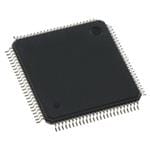
Image Preview
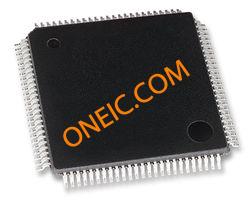
Image Preview