STM32F103VE
32-bit ARM Cortex M3 microcontrollers with 512KB flash memory
Manufacturer: stm
series introduction
# Introduction to the STM32F103VE Product Series
## 1. Overview
The STM32F103VE is part of the STM32F1 series of 32 - bit microcontrollers developed by STMicroelectronics. This series is based on the ARM Cortex - M3 core, which offers a high - performance, low - power solution for a wide range of embedded applications. The STM32F103VE, in particular, is designed to meet the requirements of applications that demand a balance between processing power, memory, and cost - effectiveness.
## 2. Key Features
### 2.1 Core and Performance
- **ARM Cortex - M3 Core**: The ARM Cortex - M3 core at the heart of the STM32F103VE provides a high - performance processing engine. It features a 32 - bit RISC architecture with a Harvard architecture, which allows for simultaneous access to instructions and data. This results in efficient code execution and high - speed processing. The core can operate at a maximum frequency of 72 MHz, enabling it to handle complex tasks quickly.
- **Thumb - 2 Instruction Set**: The Thumb - 2 instruction set combines the code density of 16 - bit Thumb instructions with the performance of 32 - bit ARM instructions. This allows for more compact code, reducing the memory footprint of applications while maintaining high performance.
### 2.2 Memory
- **Flash Memory**: The STM32F103VE is equipped with 512 KB of on - chip flash memory. Flash memory is non - volatile, which means that the program code stored in it is retained even when the power is turned off. This large amount of flash memory allows developers to store complex applications, including operating systems, drivers, and user - specific code.
- **SRAM**: It also has 64 KB of on - chip static random - access memory (SRAM). SRAM is used for storing variables, data buffers, and the stack during program execution. The relatively large SRAM size enables the microcontroller to handle data - intensive applications without the need for external memory.
### 2.3 Peripherals
- **GPIO Ports**: The STM32F103VE has multiple general - purpose input/output (GPIO) ports. These ports can be configured as inputs or outputs, allowing the microcontroller to interface with external devices such as sensors, actuators, and displays. The GPIO ports support various modes, including push - pull, open - drain, and pull - up/down resistors, providing flexibility in different application scenarios.
- **Timers**: It includes several timers, such as general - purpose timers, advanced - control timers, and SysTick timer. The general - purpose timers can be used for tasks like pulse - width modulation (PWM) generation, which is commonly used in motor control applications. The advanced - control timers offer additional features for more precise control, such as complementary PWM outputs for three - phase motor control. The SysTick timer is a 24 - bit down - counter that can be used for system tick generation, providing a simple way to implement time - based functions.
- **Communication Interfaces**: The microcontroller supports a wide range of communication interfaces, including SPI (Serial Peripheral Interface), I2C (Inter - Integrated Circuit), USART (Universal Synchronous/Asynchronous Receiver/Transmitter), and CAN (Controller Area Network). These interfaces allow the STM32F103VE to communicate with other devices, such as sensors, displays, and other microcontrollers, enabling the development of complex embedded systems.
- **Analog - to - Digital Converter (ADC)**: The STM32F103VE is equipped with a
Images for reference

100-LFBGA

100-LQFP
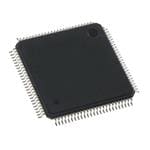
Image Preview