STM32F103VDT7
32-bit ARM Cortex M3 microcontrollers with 384KB Flash memory
Manufacturer: stm
series introduction
# Introduction to the STM32F103VDT7 Product Series
## 1. Overview
The STM32F103VDT7 belongs to the STM32F103 Value Line series of microcontrollers developed by STMicroelectronics. These microcontrollers are based on the ARM Cortex - M3 32 - bit RISC core, which offers a high - performance, low - power solution for a wide range of embedded applications. The STM32F103VDT7 is specifically designed to provide a balance between processing power, memory, and cost - effectiveness, making it a popular choice among developers in various industries.
## 2. Key Features
### 2.1 Core and Performance
- **ARM Cortex - M3 Core**: The ARM Cortex - M3 core at the heart of the STM32F103VDT7 provides a high - performance processing engine. It features a 32 - bit instruction set and a Harvard architecture, which allows for simultaneous access to instructions and data. This results in efficient code execution and fast processing speeds. The core can operate at a maximum frequency of 72 MHz, enabling it to handle complex tasks with ease.
- **Thumb - 2 Instruction Set**: The Thumb - 2 instruction set combines the benefits of 16 - bit and 32 - bit instructions. It provides high code density, which reduces the memory footprint of the application, while still maintaining high performance. This is particularly useful for applications with limited memory resources.
### 2.2 Memory
- **Flash Memory**: The STM32F103VDT7 is equipped with 256 KB of embedded Flash memory. Flash memory is non - volatile, which means that the program code stored in it is retained even when the power is turned off. This makes it suitable for storing the application firmware. The Flash memory has a high - speed access time, allowing for fast code execution.
- **SRAM**: It also has 64 KB of static random - access memory (SRAM). SRAM is used for storing variables, data buffers, and the stack during program execution. The large SRAM size enables the microcontroller to handle complex algorithms and data - intensive applications.
### 2.3 Peripherals
- **GPIO Ports**: The microcontroller has multiple general - purpose input/output (GPIO) ports. These ports can be configured as either inputs or outputs, allowing for easy interfacing with external devices such as sensors, actuators, and displays. The GPIO ports support various modes, including push - pull, open - drain, and pull - up/down resistors, providing flexibility in different application scenarios.
- **Timers**: There are several timers available on the STM32F103VDT7, including general - purpose timers, advanced - control timers, and basic timers. These timers can be used for a variety of applications, such as generating PWM signals for motor control, measuring time intervals, and implementing delay functions.
- **Communication Interfaces**: It supports a wide range of communication interfaces, including SPI (Serial Peripheral Interface), I2C (Inter - Integrated Circuit), USART (Universal Synchronous/Asynchronous Receiver/Transmitter), and CAN (Controller Area Network). These interfaces enable the microcontroller to communicate with other devices, such as sensors, displays, and other microcontrollers, facilitating data exchange and system integration.
- **Analog - to - Digital Converter (ADC)**: The STM32F103VDT7 is equipped with a 12 - bit ADC. The ADC can be used to convert analog signals from sensors, such as temperature sensors and pressure sensors, into digital values that can be processed by the microcontroller. It has multiple channels, allowing for simultaneous sampling
Images for reference

100-LQFP
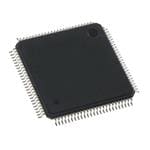
Image Preview
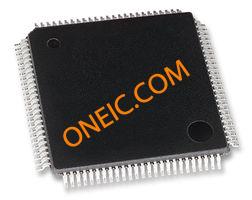
Image Preview