STM32F103VBT6
32-bit ARM Cortex M3 microcontrollers with 128KB flash memory
Manufacturer: stm
series introduction
# Introduction to the STM32F103VBT6 Product Series
## 1. Overview
The STM32F103VBT6 is part of STMicroelectronics' popular STM32F103 series, which belongs to the ARM® Cortex® - M3 32 - bit microcontroller family. These microcontrollers are known for their high performance, low power consumption, and rich set of peripherals, making them suitable for a wide range of applications.
## 2. Key Features
### 2.1 Core and Performance
- **ARM Cortex - M3 Core**: The STM32F103VBT6 is powered by an ARM Cortex - M3 core, which offers a high - performance 32 - bit RISC architecture. It has a Harvard architecture with separate instruction and data buses, enabling efficient execution of instructions. The core can operate at a maximum frequency of 72 MHz, providing fast processing capabilities for various tasks.
- **Memory and Processing Power**: It comes with 128 KB of Flash memory, which is used to store the program code. This allows developers to implement relatively complex algorithms and applications. Additionally, it has 20 KB of SRAM, which is used for data storage during program execution, such as variables, buffers, and stack space.
### 2.2 Peripherals
#### 2.2.1 Communication Interfaces
- **USART (Universal Synchronous/Asynchronous Receiver/Transmitter)**: There are multiple USART interfaces available on the STM32F103VBT6. These interfaces support both synchronous and asynchronous communication modes, making it easy to communicate with other devices such as sensors, displays, and communication modules. For example, it can be used to communicate with an RS - 232 or RS - 485 device for long - distance data transmission.
- **SPI (Serial Peripheral Interface)**: The SPI interface provides a high - speed serial communication protocol. It is commonly used to communicate with external devices such as flash memories, ADCs (Analog - to - Digital Converters), and DACs (Digital - to - Analog Converters). The SPI interface allows for fast data transfer rates, which is beneficial for applications that require high - speed data exchange.
- **I2C (Inter - Integrated Circuit)**: The I2C interface is a widely used serial communication protocol for connecting multiple integrated circuits on a single bus. It is often used to communicate with sensors, EEPROMs, and other low - speed devices. The STM32F103VBT6 supports both master and slave modes on its I2C interfaces, providing flexibility in system design.
#### 2.2.2 Timers
- **General - Purpose Timers**: There are several general - purpose timers available on the STM32F103VBT6. These timers can be used for a variety of applications, such as generating PWM (Pulse - Width Modulation) signals for motor control, measuring time intervals, and implementing delay functions. The timers can be configured in different modes, including up - counting, down - counting, and up - down - counting modes.
- **Advanced - Control Timers**: The advanced - control timers offer additional features compared to the general - purpose timers. They can be used for more complex motor control applications, such as controlling brushless DC motors and stepper motors. These timers can generate high - resolution PWM signals with advanced features like dead - time insertion and complementary outputs.
#### 2.2.3 Analog - to - Digital Converter (ADC)
- The STM32F103VBT6 is equipped with a 12 - bit ADC. The ADC can convert analog input signals into
Images for reference

100-LQFP
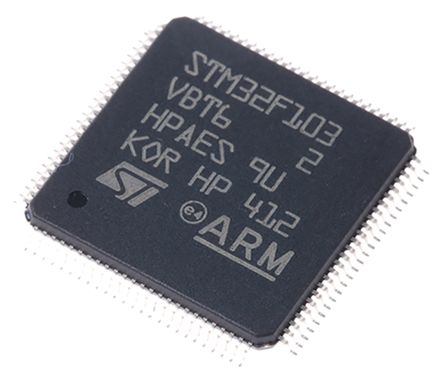
Image Preview
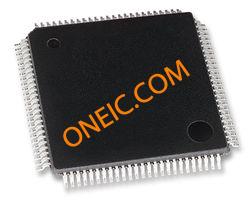
Image Preview