STM32F103TBU7
32-bit ARM Cortex M3 microcontrollers with 128KB flash memory
Manufacturer: stm
series introduction
# Introduction to the STM32F103TBU7 Product Series
## 1. Overview
The STM32F103TBU7 is part of STMicroelectronics' popular STM32F103 series, which is based on the ARM® Cortex® - M3 32 - bit RISC core. This product series is renowned for its high - performance, low - power consumption, and rich peripheral integration, making it an ideal choice for a wide range of embedded applications.
## 2. Key Features
### 2.1 Core and Performance
- **ARM Cortex - M3 Core**: The STM32F103TBU7 is powered by the ARM Cortex - M3 core, which offers a high - performance architecture with a 32 - bit instruction set. It can execute complex algorithms efficiently, providing a maximum operating frequency of up to 72 MHz. This high clock speed enables fast data processing and real - time response, making it suitable for applications that require quick decision - making, such as motor control and industrial automation.
- **Memory and Bus Architecture**: It comes with 128 KB of Flash memory, which is used to store the program code. This large - capacity Flash allows developers to implement complex applications with ease. Additionally, it has 20 KB of SRAM for data storage during program execution. The device features a high - speed AHB (Advanced High - performance Bus) and APB (Advanced Peripheral Bus) architecture, which ensures efficient data transfer between the core, memory, and peripherals.
### 2.2 Peripherals
- **GPIO (General - Purpose Input/Output)**: The STM32F103TBU7 is equipped with a large number of GPIO pins. These pins can be configured as either input or output, and they support various functions such as push - pull, open - drain, and pull - up/down resistors. GPIO pins are commonly used for interfacing with external devices like sensors, actuators, and displays.
- **Timers**: It includes multiple timers, such as general - purpose timers and advanced - control timers. General - purpose timers can be used for tasks like generating PWM (Pulse - Width Modulation) signals, measuring time intervals, and counting events. Advanced - control timers are specifically designed for motor control applications, providing precise control over the speed and direction of motors.
- **Communication Interfaces**:
- **UART (Universal Asynchronous Receiver/Transmitter)**: The UART interface allows the device to communicate with other serial devices, such as computers, sensors, and modems. It supports full - duplex communication and can operate at various baud rates, making it a versatile option for serial data transfer.
- **SPI (Serial Peripheral Interface)**: SPI is a high - speed synchronous serial communication interface. It enables fast data transfer between the STM32F103TBU7 and other SPI - compatible devices, such as external memory chips and sensors.
- **I2C (Inter - Integrated Circuit)**: The I2C interface is a widely used serial communication protocol for connecting low - speed devices. It allows multiple devices to be connected on the same bus, simplifying the hardware design and reducing the number of wires required.
### 2.3 Analog - to - Digital and Digital - to - Analog Conversion
- **ADC (Analog - to - Digital Converter)**: The STM32F103TBU7 features a 12 - bit ADC with up to 16 channels. This ADC can convert analog signals from external sensors (such as temperature sensors, pressure sensors, etc.) into digital values with high precision. The conversion speed is fast, allowing for real - time monitoring of analog signals.
Images for reference
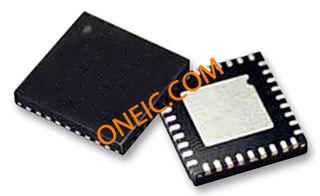
Image Preview
Image Preview