STM32F103T8U7TR
32-bit ARM Cortex microcontrollers with 64KB flash memory
Manufacturer: stm
series introduction
# Introduction to the STM32F103T8U7TR Product Series
## 1. Overview
The STM32F103T8U7TR belongs to the STM32F103 series of microcontrollers developed by STMicroelectronics. This series is well - known for its high performance, low power consumption, and rich peripheral integration, making it a popular choice in a wide range of embedded applications.
## 2. Core and Architecture
### 2.1 ARM Cortex - M3 Core
The STM32F103T8U7TR is powered by the ARM Cortex - M3 32 - bit RISC core. This core offers a high - performance processing platform with a Harvard architecture, which allows for simultaneous access to instructions and data. It has a 3 - stage pipeline that enables efficient instruction execution, resulting in a high processing speed. The Cortex - M3 core also includes a nested vectored interrupt controller (NVIC), which can handle a large number of interrupt sources with low latency, ensuring real - time responsiveness in applications.
### 2.2 Memory Organization
- **Flash Memory**: It is equipped with a certain amount of on - chip flash memory. Flash memory is non - volatile, which means it retains data even when the power is turned off. This is used to store the program code of the microcontroller. The flash memory in the STM32F103T8U7TR provides sufficient space for developers to write and store their application programs, and it also supports in - system programming (ISP) and in - application programming (IAP), allowing for easy firmware updates.
- **SRAM**: The microcontroller has a dedicated static random - access memory (SRAM). SRAM is used for storing variables, data buffers, and the stack during program execution. The available SRAM in the STM32F103T8U7TR ensures smooth operation of the application by providing fast access to data, reducing the time required for data retrieval and manipulation.
## 3. Peripherals
### 3.1 General - Purpose Input/Output (GPIO)
The STM32F103T8U7TR features a number of GPIO pins. These pins can be configured as either input or output, and they can be used for a variety of purposes. For example, they can be used to interface with external sensors, such as temperature sensors or proximity sensors, by reading the sensor data as input. On the other hand, they can be used to control external actuators, like LEDs or motors, by providing output signals.
### 3.2 Timers
- **General - Purpose Timers**: There are multiple general - purpose timers available. These timers can be used for a wide range of applications, such as generating PWM (Pulse Width Modulation) signals. PWM signals are commonly used in motor control applications to control the speed and direction of motors. They can also be used for event counting, measuring time intervals, and generating accurate time delays.
- **Advanced - Control Timers**: The advanced - control timers offer additional features compared to general - purpose timers. They are often used in more complex applications, such as servo motor control, where precise control of the motor's position and speed is required.
### 3.3 Communication Interfaces
- **Universal Asynchronous Receiver/Transmitter (UART)**: UART is a widely used serial communication interface. It allows the STM32F103T8U7TR to communicate with other devices, such as computers, sensors, or other microcontrollers, using a simple serial protocol. UART is commonly used for debugging purposes, as well as for data transfer between different components in a system.
- **Serial Peripheral Interface (SPI
Images for reference
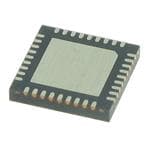
Image Preview