STM32F103T8U6
32-bit ARM Cortex M3 microcontrollers with 64KB flash memory
Manufacturer: stm
series introduction
# Introduction to the STM32F103T8U6 Product Series
## 1. Overview
The STM32F103T8U6 belongs to the STM32F1 series of microcontrollers developed by STMicroelectronics. This series is renowned for its high - performance, low - power consumption, and rich peripheral integration, making it a popular choice in a wide range of embedded applications.
## 2. Core and Architecture
### 2.1 ARM Cortex - M3 Core
The STM32F103T8U6 is powered by the ARM Cortex - M3 32 - bit RISC core. This core offers a high - performance processing platform with a Harvard architecture, which means it has separate instruction and data buses. This allows for simultaneous access to instructions and data, significantly improving the processing speed. The Cortex - M3 core also features a Thumb - 2 instruction set, which combines the code density of 16 - bit Thumb instructions with the performance of 32 - bit ARM instructions.
### 2.2 Memory Organization
- **Flash Memory**: It is equipped with 64 KB of on - chip flash memory. Flash memory is non - volatile, which means it retains data even when the power is turned off. This makes it ideal for storing the program code of the microcontroller. Developers can easily program and reprogram the flash memory, enabling rapid prototyping and software updates.
- **SRAM**: The microcontroller has 20 KB of static random - access memory (SRAM). SRAM is used for storing variables, data buffers, and the stack during program execution. The relatively large SRAM size allows for efficient data handling and processing, especially in applications that require real - time data manipulation.
## 3. Peripherals
### 3.1 GPIO (General - Purpose Input/Output)
The STM32F103T8U6 has a generous number of GPIO pins. These pins can be configured as either input or output, and they support various modes such as push - pull, open - drain, and pull - up/down resistors. GPIO pins are the basic building blocks for interfacing with external devices such as sensors, actuators, and displays. For example, a temperature sensor can be connected to a GPIO input pin, and an LED can be connected to a GPIO output pin.
### 3.2 Timers
- **General - Purpose Timers**: There are multiple general - purpose timers available. These timers can be used for a variety of applications, including generating PWM (Pulse - Width Modulation) signals, measuring time intervals, and counting external events. For instance, in a motor control application, a PWM signal generated by a timer can be used to control the speed of a DC motor.
- **Advanced - Control Timers**: The advanced - control timers offer additional features such as complementary PWM outputs with dead - time insertion. This is particularly useful in applications like three - phase motor control, where precise control of the motor's phases is required.
### 3.3 Communication Interfaces
- **UART (Universal Asynchronous Receiver/Transmitter)**: The UART interface allows for asynchronous serial communication between the microcontroller and other devices. It is commonly used for communicating with sensors, modules, or other microcontrollers. For example, a GPS module can be connected to the microcontroller via UART to receive location data.
- **SPI (Serial Peripheral Interface)**: SPI is a synchronous serial communication interface that provides high - speed data transfer. It is often used for communicating with external memory devices, displays, or sensors that support the SPI protocol.
- **I2C (Inter - Integrated Circuit)**: The I2C interface is a multi - master, multi - slave serial
Images for reference
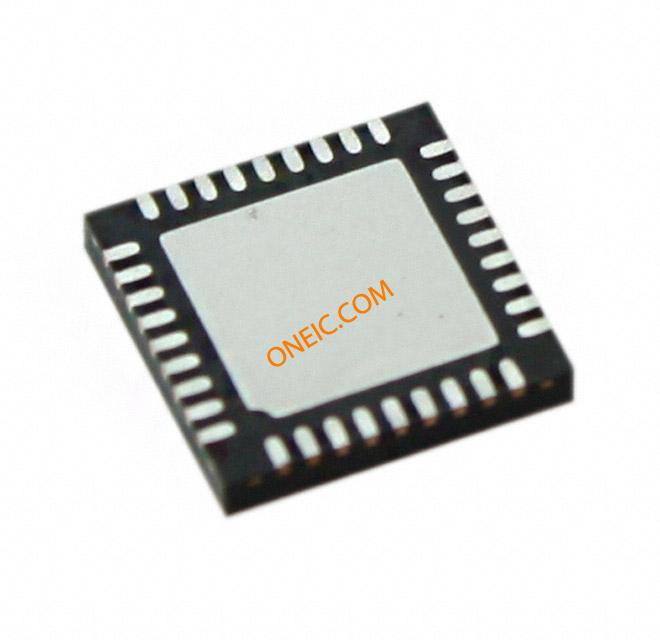
STM32-36VFQFN

Image Preview

Image Preview