STM32F103T6U6A
32-bit ARM Cortex M3 microcontrollers with 32KB flash, 36-pin VFQFPN package
Manufacturer: stm
series introduction
# Introduction to the STM32F103T6U6A Product Series
## 1. Overview
The STM32F103T6U6A product series belongs to STMicroelectronics' well - known STM32F103 family, which is based on the ARM Cortex - M3 32 - bit RISC core. These microcontrollers are designed to offer a high - performance, cost - effective, and energy - efficient solution for a wide range of embedded applications.
## 2. Key Features
### 2.1 Core and Performance
- **ARM Cortex - M3 Core**: The ARM Cortex - M3 core at the heart of the STM32F103T6U6A provides a high - level of processing power with a 32 - bit architecture. It supports a rich set of instructions, enabling efficient execution of complex algorithms. The core operates at a maximum frequency of up to 72 MHz, which allows for fast data processing and real - time response in various applications.
- **Memory Access and Processing**: It has a Harvard architecture, which means separate buses for instructions and data. This allows for simultaneous access to program memory and data memory, significantly improving the overall processing speed.
### 2.2 Memory
- **Flash Memory**: The STM32F103T6U6A is equipped with a certain amount of on - chip flash memory. Flash memory is non - volatile, which means it retains its data even when the power is turned off. This makes it ideal for storing the program code of the microcontroller. The specific capacity of the flash memory in this series is suitable for medium - sized applications, allowing developers to store complex firmware and algorithms.
- **SRAM**: Alongside the flash memory, there is also a sufficient amount of static random - access memory (SRAM). SRAM is used for storing data during the runtime of the program. It provides fast access times, enabling quick read and write operations, which is crucial for applications that require high - speed data processing.
### 2.3 Peripherals
#### 2.3.1 Communication Interfaces
- **UART (Universal Asynchronous Receiver - Transmitter)**: Multiple UART interfaces are available, which are commonly used for serial communication. UART allows the microcontroller to communicate with other devices such as sensors, displays, or other microcontrollers over a serial link. It supports various baud rates, making it flexible for different communication requirements.
- **SPI (Serial Peripheral Interface)**: The SPI interface provides a high - speed serial communication protocol. It is often used for communicating with external devices like SD cards, EEPROMs, or other high - speed sensors. SPI allows for full - duplex communication, enabling fast data transfer between the microcontroller and the external device.
- **I2C (Inter - Integrated Circuit)**: I2C is a multi - master, multi - slave serial communication protocol. It is widely used for connecting low - speed devices such as sensors, real - time clocks, and EEPROMs. The I2C interface in the STM32F103T6U6A supports standard, fast, and fast - plus modes, providing flexibility for different device requirements.
#### 2.3.2 Timers
- **General - Purpose Timers**: There are several general - purpose timers available in the STM32F103T6U6A. These timers can be used for a variety of applications, such as generating PWM (Pulse Width Modulation) signals for motor control, measuring time intervals, or generating periodic interrupts.
- **Advanced - Control Timers**: The advanced - control timers offer additional features compared to the general - purpose timers. They are often used for
Images for reference
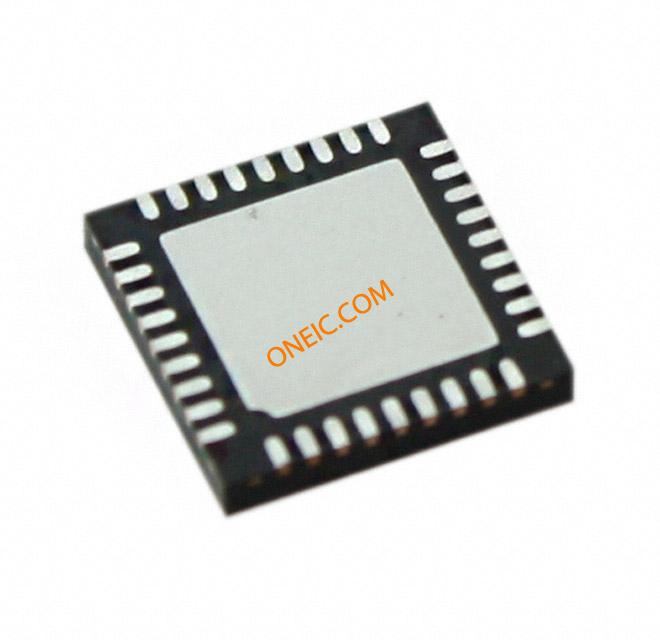
STM32-36VFQFN
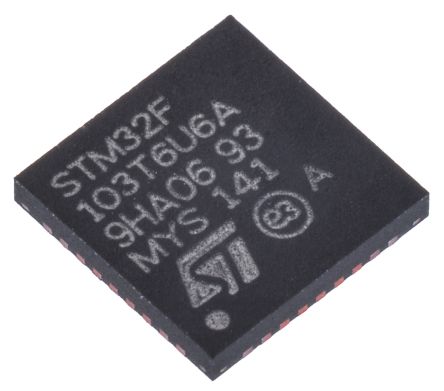
Image Preview
Image Preview