STM32F103RDT6TR
32-bit ARM Cortex M3 microcontrollers with 384KB flash memory
Manufacturer: stm
series introduction
# Introduction to the STM32F103RDT6TR Product Series
## 1. Overview
The STM32F103RDT6TR belongs to the STM32F103 series of microcontrollers developed by STMicroelectronics. This series is based on the ARM Cortex - M3 32 - bit RISC core, which offers a high - performance, low - power solution for a wide range of embedded applications. The STM32F103RDT6TR, in particular, is designed to meet the requirements of various industrial, consumer, and automotive applications with its rich set of features and excellent performance.
## 2. Key Features
### 2.1 Core and Performance
- **ARM Cortex - M3 Core**: The ARM Cortex - M3 core provides a high - level of processing power with a 32 - bit architecture. It supports a wide range of instructions, enabling efficient execution of complex algorithms. The core operates at a maximum frequency of up to 72 MHz, which allows for fast data processing and real - time response.
- **Memory and Bus Architecture**: It has 256 KB of Flash memory for program storage and 40 KB of SRAM for data storage. The advanced bus architecture ensures efficient data transfer between the core, memory, and peripherals, reducing the overall processing time.
### 2.2 Peripherals
- **Communication Interfaces**:
- **USART (Universal Synchronous/Asynchronous Receiver/Transmitter)**: Multiple USART interfaces are available, which can be used for serial communication with other devices such as sensors, displays, or other microcontrollers. They support various communication protocols, including RS - 232, RS - 485, and LIN.
- **SPI (Serial Peripheral Interface)**: The SPI interfaces provide high - speed serial communication between the microcontroller and external devices like flash memories, sensors, or LCD displays. They support full - duplex communication and can operate at high clock speeds.
- **I2C (Inter - Integrated Circuit)**: The I2C interfaces are used for communication with low - speed devices such as EEPROMs, sensors, and other I2C - compatible devices. They support multi - master and multi - slave communication modes.
- **Timers**:
- **General - Purpose Timers**: There are several general - purpose timers available, which can be used for tasks such as pulse width modulation (PWM) generation, frequency measurement, and event counting. These timers can be configured to generate accurate PWM signals for motor control applications.
- **Advanced - Control Timers**: The advanced - control timers offer additional features such as complementary PWM outputs with dead - time insertion, which are essential for applications like motor control and power management.
- **Analog - to - Digital Converter (ADC)**: The STM32F103RDT6TR is equipped with a 12 - bit ADC, which can convert analog signals from sensors into digital values. It has multiple input channels, allowing for simultaneous sampling of multiple analog signals. The ADC can operate at high speeds, enabling real - time data acquisition.
### 2.3 Low - Power Modes
- **Sleep Mode**: In sleep mode, the core is stopped, but the peripherals and the SRAM retain their states. This mode consumes very low power and can be quickly exited to resume normal operation, making it suitable for applications where power consumption needs to be minimized during idle periods.
- **Stop Mode**: In stop mode, the voltage regulator can be set to either low - power or normal mode. The core and most of the peripherals are stopped, and the SRAM and register contents are retained. This mode offers a significant reduction in power consumption while
Images for reference
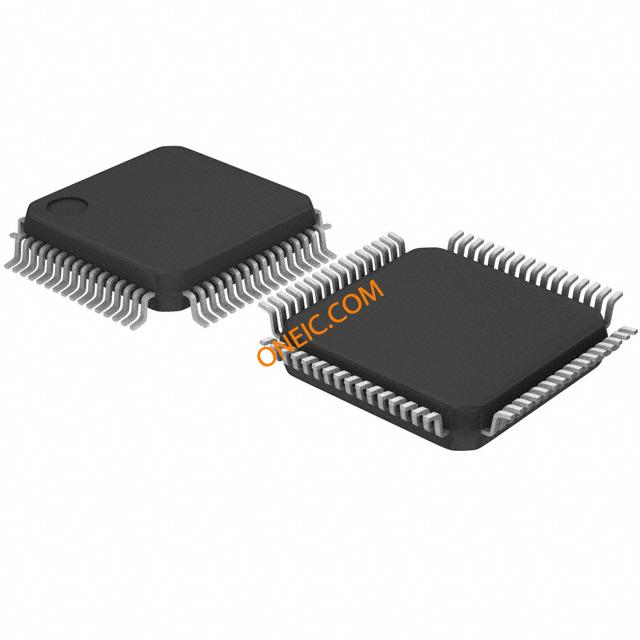
64-LQFP
Image Preview