STM32F103CBT6
32-bit ARM Cortex M3 microcontrollers with 128KB flash, 20KB RAM, and 48-pin LQFP
Manufacturer: stm
series introduction
# Introduction to the STM32F103CBT6 Product Series
## 1. Overview
The STM32F103CBT6 is a member of the popular STM32F103 series of microcontrollers developed by STMicroelectronics. These microcontrollers are based on the ARM Cortex - M3 32 - bit RISC core, which offers a high - performance, low - power solution for a wide range of embedded applications. The STM32F103CBT6 combines the power of the ARM Cortex - M3 core with a rich set of peripherals, making it suitable for various industrial, consumer, and automotive applications.
## 2. Key Features
### 2.1 Core and Performance
- **ARM Cortex - M3 Core**: The ARM Cortex - M3 core provides a high - performance processing platform with a 32 - bit architecture. It has a Harvard architecture with separate instruction and data buses, allowing for efficient data transfer and execution. The core supports a wide range of instructions, including Thumb - 2 instruction set, which provides a good balance between code density and performance.
- **Clock Speed**: The STM32F103CBT6 can operate at a maximum clock speed of 72 MHz. This high clock speed enables the microcontroller to handle complex tasks such as real - time data processing, control algorithms, and communication protocols.
- **Memory Protection Unit (MPU)**: The MPU provides a hardware - based memory protection mechanism, which helps in enhancing the security and reliability of the system. It allows the programmer to define different memory regions with specific access permissions, preventing unauthorized access to critical memory areas.
### 2.2 Memory
- **Flash Memory**: The STM32F103CBT6 is equipped with 128 KB of embedded flash memory. Flash memory is non - volatile, which means that the program code stored in it is retained even when the power is turned off. This makes it suitable for storing the application code and other data that needs to be preserved across power cycles.
- **SRAM**: It has 20 KB of static random - access memory (SRAM). SRAM is used for storing variables, data buffers, and the stack during the execution of the program. The relatively large SRAM size allows for efficient data handling and processing.
### 2.3 Peripherals
#### 2.3.1 General - Purpose Input/Output (GPIO)
- The microcontroller has a total of 51 general - purpose input/output pins. These pins can be configured as either input or output, and they can be used for a variety of purposes such as interfacing with external sensors, actuators, and other devices. The GPIO pins support different drive strengths and pull - up/down resistors, providing flexibility in hardware design.
#### 2.3.2 Timers
- **Advanced - Control Timers**: There are 2 advanced - control timers, which can be used for applications such as motor control, PWM generation, and high - precision timing. These timers support features like dead - time insertion, complementary output generation, and break input functionality.
- **General - Purpose Timers**: There are 4 general - purpose timers, which are suitable for tasks such as event counting, pulse width measurement, and basic PWM generation. They offer a wide range of prescaler and counter values, allowing for precise timing control.
#### 2.3.3 Communication Interfaces
- **Universal Asynchronous Receiver/Transmitter (UART)**: It has 3 UART interfaces, which are commonly used for serial communication with other devices such as sensors, displays, and communication modules. UART is a simple and widely used communication protocol that allows for the transmission and
Images for reference
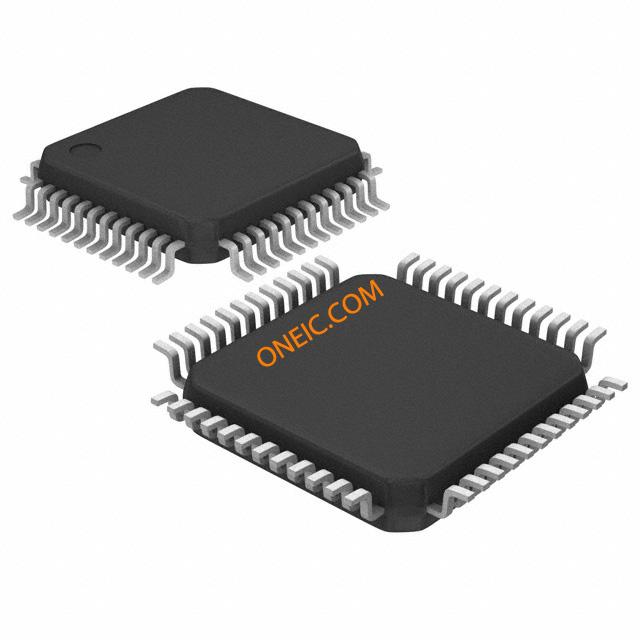
48-LQFP
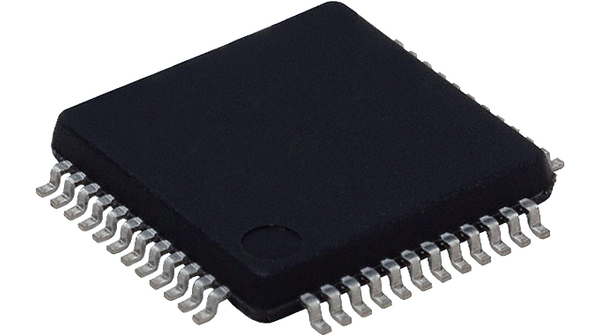
Image Preview

Image Preview