STM32F103CB
32-bit ARM Cortex M3 microcontrollers with 64-128KB flash memory
Manufacturer: stm
series introduction
# Introduction to the STM32F103CB Product Series
## 1. Overview
The STM32F103CB is part of STMicroelectronics' popular STM32F1 series, which is based on the ARM Cortex - M3 32 - bit RISC core. This product series is designed to offer a high - performance, cost - effective solution for a wide range of embedded applications. The STM32F103CB microcontroller combines a rich set of features, excellent power efficiency, and a large amount of on - chip resources, making it a top choice for developers in various industries.
## 2. Core and Architecture
### ARM Cortex - M3 Core
- The ARM Cortex - M3 core at the heart of the STM32F103CB provides high - performance processing capabilities. It has a 32 - bit Harvard architecture with a 3 - stage pipeline, which enables efficient instruction execution. The core supports a wide range of instructions, including Thumb - 2 instruction set, which combines the code density of Thumb instructions with the performance of ARM instructions.
- It also features a nested vectored interrupt controller (NVIC) that can handle up to 43 external interrupts and exceptions. This allows for quick and efficient response to various events in the system, enhancing the real - time performance of the microcontroller.
### Memory Architecture
- **Flash Memory**: The STM32F103CB is equipped with 128 KB of on - chip flash memory. Flash memory is non - volatile, which means it retains its data even when the power is turned off. This makes it ideal for storing the application code, bootloader, and other important data. The flash memory has a high - speed access time, enabling fast code execution.
- **SRAM**: It has 20 KB of static random - access memory (SRAM). SRAM is used for storing variables, stack, and heap during the runtime of the application. The large SRAM size allows for the implementation of complex algorithms and data - intensive applications.
## 3. Peripherals
### GPIO (General - Purpose Input/Output)
- The STM32F103CB has a total of 51 general - purpose input/output pins. These pins can be configured as either input or output, and they support various modes such as push - pull, open - drain, and pull - up/down resistors. GPIO pins are used for interfacing with external devices such as sensors, actuators, and other microcontrollers.
- They can also be used for generating and detecting digital signals, making them suitable for applications like LED control, button input, and communication protocol bit - banging.
### Timers
- There are multiple timers available in the STM32F103CB, including 4 general - purpose timers and 2 basic timers. General - purpose timers can be used for a variety of applications such as pulse - width modulation (PWM) generation, frequency measurement, and input capture.
- For example, in a motor control application, the PWM output from the timer can be used to control the speed of the motor. The basic timers are mainly used for time - base generation and simple timing tasks.
### Communication Interfaces
- **USART (Universal Synchronous/Asynchronous Receiver/Transmitter)**: It has 3 USART interfaces, which support both synchronous and asynchronous communication. USART is commonly used for serial communication with other devices such as computers, sensors, and displays. It can operate at different baud rates, allowing for flexible data transfer speeds.
- **SPI (Serial Peripheral Interface)**: There are 2 SPI interfaces available. SPI is a high - speed serial communication protocol that is used for
Images for reference
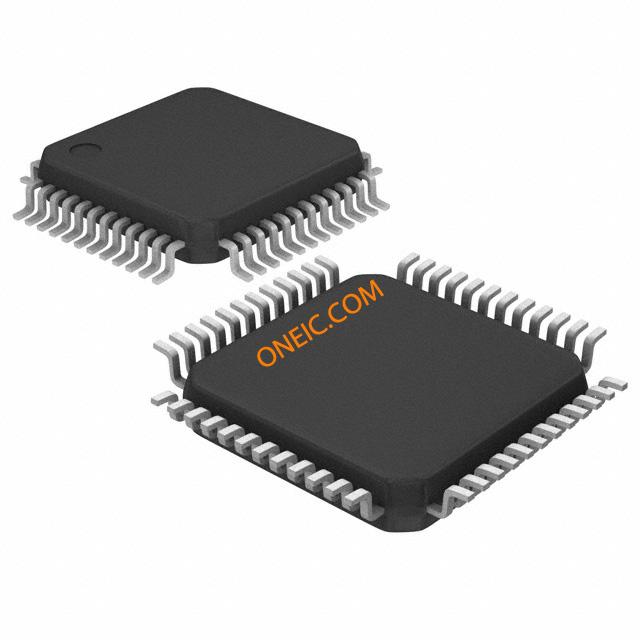
48-LQFP
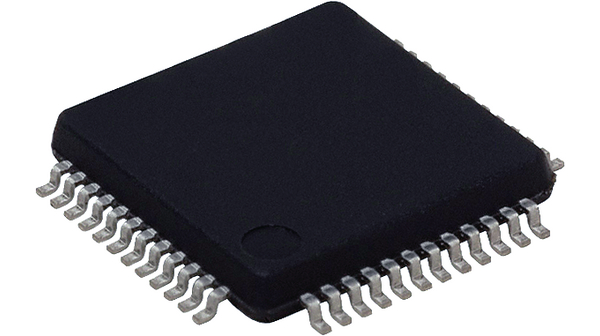
Image Preview
Image Preview