STM32F101VET6
32-bit ARM Cortex M3 microcontrollers with 512KB flash, 48KB RAM, 100-pin LQFP
Manufacturer: stm
series introduction
# Introduction to the STM32F101VET6 Product Series
## 1. Overview
The STM32F101VET6 is part of STMicroelectronics' STM32F1 series of 32 - bit microcontrollers based on the ARM Cortex - M3 core. Renowned for its high performance, low power consumption, and rich peripheral set, this microcontroller is a popular choice in a wide range of embedded applications.
## 2. Core and Architecture
### ARM Cortex - M3 Core
- The ARM Cortex - M3 core at the heart of the STM32F101VET6 offers a high - performance 32 - bit RISC architecture. It features a Harvard architecture with separate instruction and data buses, enabling simultaneous access to instructions and data, which significantly improves the processing speed.
- The core supports a Thumb - 2 instruction set, which combines the code density of 16 - bit Thumb instructions with the performance of 32 - bit ARM instructions. This allows for efficient code execution while minimizing the memory footprint.
### Memory and Bus Architecture
- **Flash Memory**: The STM32F101VET6 is equipped with 512 KB of on - chip flash memory. This non - volatile memory is used to store the program code. The flash memory has a high - speed access time, enabling fast execution of instructions.
- **SRAM**: It has 64 KB of on - chip static random - access memory (SRAM). SRAM is used for storing variables, data buffers, and the stack during program execution. The large SRAM size allows for the implementation of complex algorithms and data - intensive applications.
- **Bus Matrix**: The microcontroller uses a bus matrix to manage the data transfer between different components such as the CPU, memory, and peripherals. This ensures efficient data flow and minimizes bottlenecks, enabling high - speed operation.
## 3. Peripherals
### General - Purpose Input/Output (GPIO)
- The STM32F101VET6 has a large number of GPIO pins (up to 80). These pins can be configured as either input or output, and they support various modes such as push - pull, open - drain, and pull - up/down resistors. GPIO pins are commonly used for interfacing with external devices such as sensors, actuators, and displays.
### Timers
- **Advanced - Control Timers**: It includes advanced - control timers that can be used for applications such as motor control. These timers can generate high - precision PWM signals with programmable duty cycles and frequencies, making them suitable for controlling brushless DC motors, stepper motors, etc.
- **General - Purpose Timers**: There are also general - purpose timers available. These timers can be used for tasks such as measuring time intervals, generating periodic interrupts, and implementing simple PWM signals for basic applications like LED dimming.
### Communication Interfaces
- **Universal Asynchronous Receiver/Transmitter (UART)**: Multiple UART interfaces are provided, which are widely used for serial communication. UART is commonly used for communicating with other microcontrollers, sensors, and modules that support serial communication protocols.
- **Serial Peripheral Interface (SPI)**: The SPI interface allows for high - speed serial communication between the microcontroller and external devices such as flash memories, sensors, and displays. It supports full - duplex communication and can operate at high clock speeds.
- **Inter - Integrated Circuit (I2C)**: The I2C interface is used for communicating with a wide range of I2C - compatible devices, such as EEPROMs, sensors, and real - time clocks. It uses a two - wire bus structure, which simplifies the hardware
Images for reference

100-LQFP
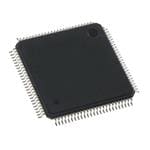
Image Preview
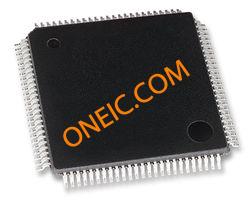
Image Preview