ST62E65CF1
8-bit microcontrollers with EPROM for embedded systems
Manufacturer: stm
series introduction
# Introduction to the ST62E65CF1 Product Series
## 1. Overview
The ST62E65CF1 product series represents a cutting - edge line of microcontrollers developed by STMicroelectronics, a global leader in semiconductor solutions. These microcontrollers are designed to meet the diverse and demanding requirements of modern electronic applications, offering a perfect balance of performance, functionality, and cost - effectiveness.
## 2. Key Features
### 2.1 High - Performance CPU
- The ST62E65CF1 series is powered by a high - speed 8 - bit CPU core. This core provides efficient processing capabilities, enabling the microcontroller to execute complex instructions quickly. It can handle real - time tasks with ease, making it suitable for applications that require rapid data processing and response, such as industrial control systems and consumer electronics.
- The CPU has a wide range of addressing modes, which allows for flexible memory access and efficient program execution. This flexibility enables developers to optimize their code for different application scenarios, improving overall system performance.
### 2.2 Memory Configuration
- **Flash Memory**: These microcontrollers are equipped with a generous amount of on - chip flash memory. The flash memory provides non - volatile storage for the program code, allowing the microcontroller to retain its functionality even when the power is turned off. This is crucial for applications where the program needs to be stored permanently, such as in embedded systems. The large flash memory capacity also enables the implementation of more complex algorithms and features.
- **RAM**: A sufficient amount of random - access memory (RAM) is available for data storage and manipulation during program execution. The RAM allows for fast data access, which is essential for applications that involve real - time data processing, such as sensor data acquisition and signal processing.
### 2.3 Peripherals
- **Timer/Counter Modules**: The ST62E65CF1 series includes multiple timer/counter modules. These modules can be used for a variety of purposes, such as generating accurate time delays, measuring time intervals, and controlling PWM (Pulse Width Modulation) signals. PWM signals are commonly used in motor control applications to regulate the speed and torque of motors.
- **Serial Communication Interfaces**: It offers a range of serial communication interfaces, including UART (Universal Asynchronous Receiver - Transmitter), SPI (Serial Peripheral Interface), and I²C (Inter - Integrated Circuit). These interfaces enable the microcontroller to communicate with other devices, such as sensors, displays, and communication modules. For example, the UART interface can be used to communicate with a PC or a wireless module, while the SPI and I²C interfaces are suitable for connecting to on - board sensors and other integrated circuits.
- **Analog - to - Digital Converter (ADC)**: An integrated ADC is provided, which allows the microcontroller to convert analog signals from sensors into digital values. This is essential for applications that involve measuring physical quantities such as temperature, pressure, and light intensity. The ADC has a high resolution and fast conversion speed, ensuring accurate and timely data acquisition.
### 2.4 Low - Power Operation
- The ST62E65CF1 series is designed with low - power consumption in mind. It offers multiple power - saving modes, such as sleep mode and standby mode. In sleep mode, the microcontroller can reduce its power consumption significantly while still retaining the contents of its memory. This is particularly useful for battery - powered applications, where long battery life is a critical requirement. The low - power operation also helps to reduce heat generation, improving the reliability and longevity of the device.
## 3. Application Areas
### 3.1 Industrial Control
- In industrial control systems, the ST62E65CF1 microcontrollers can be used for tasks such as motor control, process monitoring, and automation. The
Images for reference
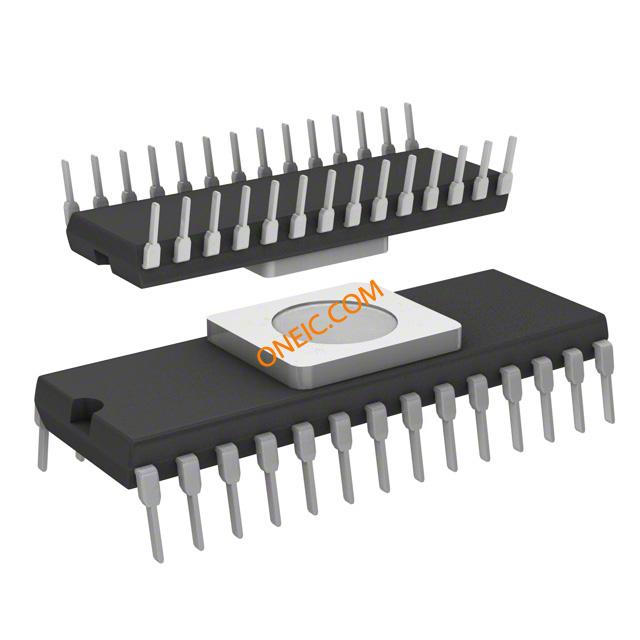
28-CDIP