PIC18LF1320
8-bit PIC microcontrollers with 8KB Flash, 256B RAM, and multiple package options
Manufacturer: microchip
series introduction
# PIC18LF1320 Product Series Introduction
## 1. Overview
The PIC18LF1320 is a remarkable member of Microchip's PIC18F family of 8 - bit microcontrollers. Designed with low - power operation in mind, it offers a wide range of features and capabilities that make it suitable for a diverse set of applications. This product series combines high - performance processing with energy - efficient design, enabling developers to create cost - effective and power - conscious solutions.
## 2. Key Features
### 2.1 CPU and Memory
- **CPU Core**: The PIC18LF1320 is powered by a high - performance RISC CPU. It has a Harvard architecture, which separates the data and instruction buses, allowing for simultaneous access to data and program memory. This results in faster execution of instructions and improved overall performance.
- **Program Memory**: It comes with up to 4 KB of Flash program memory. Flash memory is non - volatile, which means that the program code stored in it is retained even when the power is turned off. This allows for easy reprogramming during the development phase and also provides long - term storage for the final application code.
- **Data Memory**: The microcontroller has 128 bytes of RAM (Random Access Memory). RAM is used for storing temporary data during the execution of the program, such as variables, intermediate results, and stack data.
### 2.2 Low - Power Operation
- **Low - Voltage Operation**: The PIC18LF1320 can operate at a wide range of supply voltages, typically from 1.8V to 3.6V. This low - voltage operation makes it ideal for battery - powered applications, as it helps to extend the battery life.
- **Power - Saving Modes**: It offers multiple power - saving modes, including Sleep mode. In Sleep mode, the CPU is halted, and most of the on - chip peripherals are disabled, reducing the power consumption to a minimum. The microcontroller can be easily awakened from Sleep mode by an external interrupt or a timer event, allowing for efficient power management.
### 2.3 Peripherals
#### 2.3.1 Timers
- **Timer0**: This is an 8 - bit timer/counter with an 8 - bit prescaler. Timer0 can be used for a variety of applications, such as generating time delays, measuring time intervals, and implementing simple real - time clocks.
- **Timer1**: A 16 - bit timer/counter that can be configured to operate in either timer or counter mode. It can be used in applications that require more precise timing, such as generating PWM (Pulse Width Modulation) signals or implementing communication protocols.
- **Timer2**: An 8 - bit timer/counter with a 16 - bit period register. Timer2 is often used in conjunction with the PWM module to generate PWM signals with variable duty cycles.
#### 2.3.2 PWM Module
The PIC18LF1320 features a single PWM module. PWM is a technique used to control the average power delivered to a load by varying the width of the pulses in a periodic signal. This module can be used to control the speed of motors, the brightness of LEDs, and other applications that require analog - like control using digital signals.
#### 2.3.3 Analog - to - Digital Converter (ADC)
It has a 10 - bit ADC with up to 8 input channels. The ADC allows the microcontroller to convert analog signals from sensors (such as temperature sensors, light sensors, etc.) into digital values that can be processed by the CPU. This makes it suitable for applications that involve measuring and monitoring analog quantities.
#### 2.3.4 Communication Interfaces
-
Images for reference

28-VQFN Pkg

28 QFN
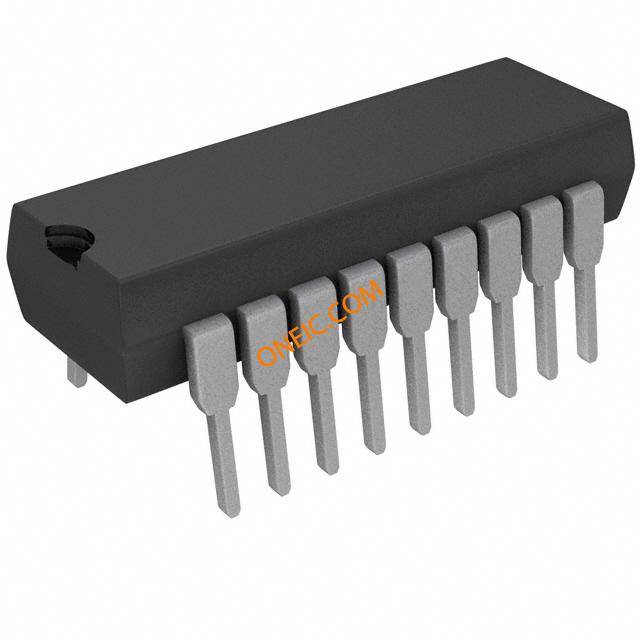
18-DIP (300mil)_SDIP18 Pkg