PIC18F4685-I/PT
8-bit microcontroller with 96KB flash, 3328B RAM, 44-pin TQFP
Manufacturer: microchip
series introduction
# PIC18F4685-I/PT Product Series Introduction
## 1. Overview
The PIC18F4685 - I/PT is a member of Microchip Technology's highly regarded PIC18F microcontroller family. These microcontrollers are designed to offer a balance of performance, features, and cost - effectiveness, making them suitable for a wide range of embedded applications. The "I/PT" in the part number typically indicates a specific package type and temperature range, which in this case is likely a plastic TQFP (Thin Quad Flat Package) suitable for industrial temperature ranges.
## 2. Key Features
### 2.1 CPU and Memory
- **High - Performance CPU**: The PIC18F4685 is powered by an enhanced Harvard architecture 8 - bit CPU. It can execute instructions at a clock speed of up to 40 MIPS (Millions of Instructions Per Second), enabling fast and efficient processing of tasks. This high - speed operation allows for real - time control and data processing in applications where quick response times are crucial.
- **Program Memory**: It comes with 64 KB of Flash program memory. Flash memory is non - volatile, which means that the program code stored in it is retained even when the power is turned off. This large amount of program memory can accommodate complex application code, including algorithms for control, communication, and data processing.
- **Data Memory**: The microcontroller has 3072 bytes of RAM (Random Access Memory). RAM is used for storing temporary data during program execution, such as variables, buffers, and intermediate results. The sufficient amount of RAM allows for efficient data handling in various applications.
### 2.2 Peripherals
#### 2.2.1 Analog Peripherals
- **Analog - to - Digital Converter (ADC)**: The PIC18F4685 features a 10 - bit ADC with up to 13 input channels. The ADC can convert analog signals from sensors or other analog sources into digital values that the microcontroller can process. This is useful in applications such as temperature sensing, voltage monitoring, and sensor data acquisition.
- **Comparator Module**: It includes a dual - comparator module. Comparators can be used to compare two analog voltages and generate a digital output based on the comparison result. This feature is often used in applications like over - voltage protection, level detection, and signal conditioning.
#### 2.2.2 Digital Peripherals
- **Universal Synchronous Asynchronous Receiver Transmitter (USART)**: The USART provides serial communication capabilities, allowing the microcontroller to communicate with other devices such as computers, sensors, and actuators. It supports both synchronous and asynchronous communication modes, making it versatile for different communication protocols.
- **Serial Peripheral Interface (SPI)**: The SPI interface enables high - speed serial communication between the microcontroller and other SPI - compatible devices. It is commonly used for communicating with external memory chips, sensors, and display modules.
- **Inter - Integrated Circuit (I²C)**: The I²C interface is a multi - master, multi - slave serial communication protocol. It is widely used for connecting low - speed devices such as EEPROMs, sensors, and real - time clocks. The PIC18F4685's I²C module supports both master and slave modes.
- **Parallel Master Port (PMP)**: The PMP allows the microcontroller to interface with external parallel devices such as LCD displays, memory chips, and other microcontrollers. It provides a high - speed data transfer path for parallel communication.
### 2.3 Timers and Counters
- **Multiple Timer/Counter Modules**: The PIC18F4685 is equipped with several timer/counter modules, including 8 - bit and
Images for reference

44-TQFP
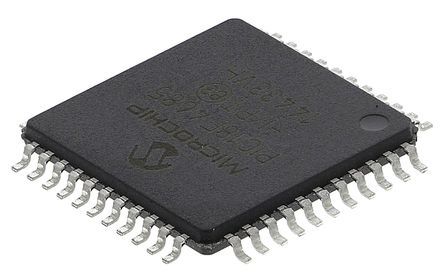
Image Preview

Image Preview