PIC16LF1825-I/ST
8-bit microcontrollers with 14KB Flash, low power, and compact TSSOP packaging
Manufacturer: microchip
series introduction
# Introduction to the PIC16LF1825 - I/ST Product Series
## 1. Overview
The PIC16LF1825 - I/ST is a member of Microchip Technology's popular PIC16F family of 8 - bit microcontrollers. This product series is designed to offer a balance of performance, low power consumption, and rich peripheral features, making it suitable for a wide range of embedded applications.
## 2. Key Features
### 2.1 Core and Memory
- **CPU Core**: It is based on the high - performance RISC (Reduced Instruction Set Computing) CPU core. This architecture allows for fast execution of instructions, with a large number of single - cycle instructions, enabling efficient code execution and reducing the overall processing time.
- **Program Memory**: The PIC16LF1825 - I/ST comes with up to 14 KB of Flash program memory. Flash memory is non - volatile, which means that the program code stored in it is retained even when the power is turned off. This makes it ideal for applications where the program needs to be stored permanently, such as in industrial control systems and consumer electronics.
- **Data Memory**: It has 368 bytes of RAM (Random Access Memory). RAM is used for storing temporary data during the execution of the program, such as variables, intermediate results, and stack operations.
### 2.2 Low - Power Operation
- **Low - Voltage Operation**: The device can operate at a wide range of supply voltages, typically from 1.8V to 5.5V. This wide voltage range allows for flexibility in power supply design and enables the use of different types of power sources, such as batteries or regulated power supplies.
- **Sleep Mode**: One of the standout features of the PIC16LF1825 - I/ST is its low - power sleep mode. In sleep mode, the microcontroller consumes extremely low power while still being able to wake up quickly in response to an external interrupt or an internal timer event. This makes it well - suited for battery - powered applications, such as wireless sensors and portable medical devices, where power conservation is crucial.
### 2.3 Peripherals
#### 2.3.1 Timers
- **Multiple Timers**: The microcontroller is equipped with multiple timers, including a 16 - bit Timer1, an 8 - bit Timer0, and a 16 - bit Timer2. These timers can be used for a variety of applications, such as generating time delays, measuring time intervals, and generating PWM (Pulse Width Modulation) signals.
- **PWM Generation**: The Timer2 can be configured to generate PWM signals. PWM is widely used in applications such as motor control, LED dimming, and power regulation. The ability to generate PWM signals directly from the microcontroller simplifies the design of these applications.
#### 2.3.2 Analog - to - Digital Converter (ADC)
- **10 - bit ADC**: The PIC16LF1825 - I/ST features a 10 - bit ADC with up to 12 input channels. The ADC allows the microcontroller to convert analog signals from sensors, such as temperature sensors, light sensors, and pressure sensors, into digital values that can be processed by the CPU. This makes it suitable for applications that require analog signal processing, such as environmental monitoring and industrial automation.
#### 2.3.3 Communication Interfaces
- **USART (Universal Synchronous/Asynchronous Receiver/Transmitter)**: The USART interface enables serial communication with other devices, such as computers, sensors, and actuators. It supports both synchronous and asynchronous communication modes, providing flexibility in communication protocols.
- **SPI (Serial Peripheral Interface)**: The SPI interface is
Images for reference
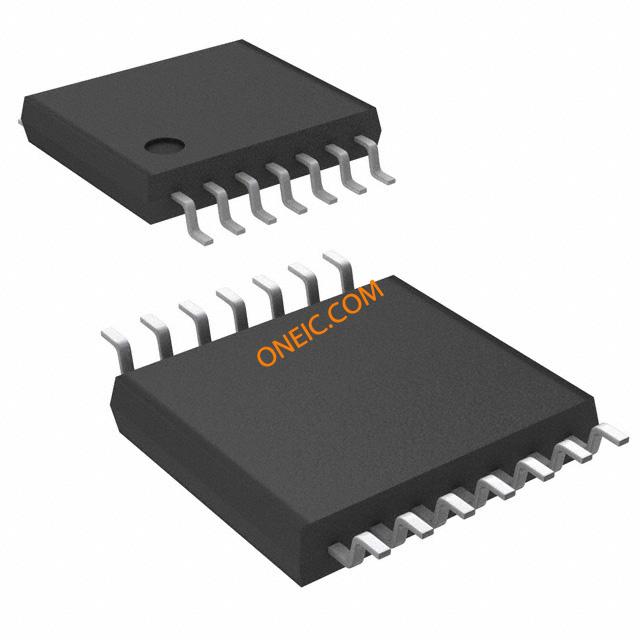
14-TSSOP

Image Preview