PIC16F877A-I/P
8-bit PIC microcontrollers with flash memory, 20MHz, 40/44-pin packages
Manufacturer: microchip
series introduction
# PIC16F877A - I/P Product Series Introduction
## 1. Overview
The PIC16F877A - I/P is a highly popular and versatile 8 - bit microcontroller from Microchip Technology. It belongs to the PIC16F87X family, which is well - known for its wide range of applications in various industries due to its excellent performance, rich feature set, and cost - effectiveness.
## 2. Key Features
### 2.1 CPU and Memory
- **CPU Architecture**: It is based on a high - performance RISC (Reduced Instruction Set Computing) architecture. This architecture simplifies the instruction set, allowing for faster execution times and lower power consumption. The CPU can execute most instructions in a single instruction cycle, which significantly enhances the overall processing speed.
- **Program Memory**: The PIC16F877A - I/P comes with 14K words of Flash program memory. Flash memory is non - volatile, meaning that the program code stored in it is retained even when the power is turned off. This allows for easy reprogramming during development and also provides long - term storage for the final application code.
- **Data Memory**: It has 368 bytes of RAM (Random Access Memory) for storing variables and intermediate data during program execution. The RAM is organized in banks, and the microcontroller provides efficient mechanisms for accessing different memory banks, enabling flexible data handling.
### 2.2 Peripherals
#### 2.2.1 Input/Output Ports
- The microcontroller features five 8 - bit bidirectional I/O ports (PORTA, PORTB, PORTC, PORTD, and PORTE). These ports can be configured as either input or output, providing great flexibility for interfacing with external devices such as sensors, actuators, and displays.
- PORTB has additional features like interrupt - on - change capability. This allows the microcontroller to detect changes in the input signals on PORTB pins and generate an interrupt, which is useful for applications that require real - time response to external events.
#### 2.2.2 Timer/Counters
- There are three timer/counters available: Timer0, Timer1, and Timer2.
- Timer0 is an 8 - bit timer/counter with an 8 - bit prescaler. It can be used for general - purpose timing applications, such as generating time delays or counting external events.
- Timer1 is a 16 - bit timer/counter that can be operated in either timer or counter mode. It has a built - in oscillator and can be used for applications like real - time clock generation and frequency measurement.
- Timer2 is an 8 - bit timer/counter with a 16 - bit period register. It is often used in conjunction with the PWM (Pulse Width Modulation) module for generating PWM signals.
#### 2.2.3 Analog - to - Digital Converter (ADC)
- The PIC16F877A - I/P is equipped with a 10 - bit ADC. It has up to eight analog input channels, allowing it to convert analog signals from sensors (such as temperature sensors, light sensors, etc.) into digital values that can be processed by the microcontroller. The ADC has a fast conversion time, enabling real - time data acquisition.
#### 2.2.4 PWM Module
- It features two independent PWM channels. PWM signals are widely used for controlling the speed of motors, adjusting the brightness of LEDs, and other applications that require variable power control. The duty cycle and frequency of the PWM signals can be easily programmed, providing precise control over the output.
#### 2.2.5 Serial Communication Interfaces
- **USART (Universal Synchronous/Asynchronous Receiver/Trans
Images for reference
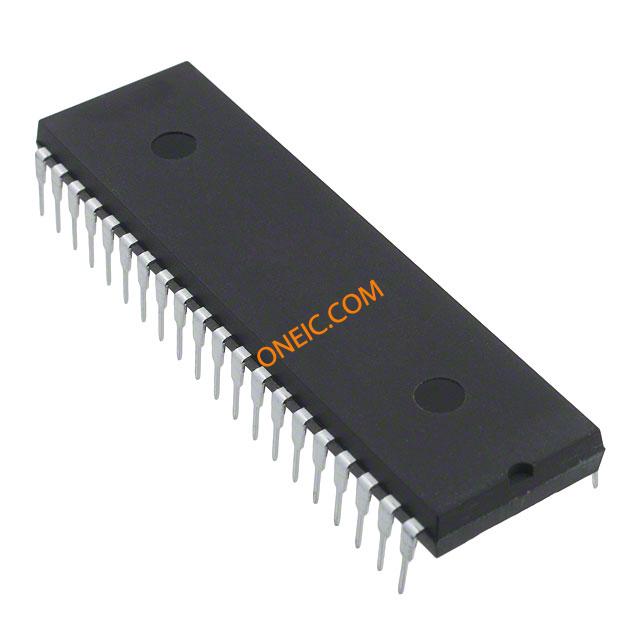
40-DIP
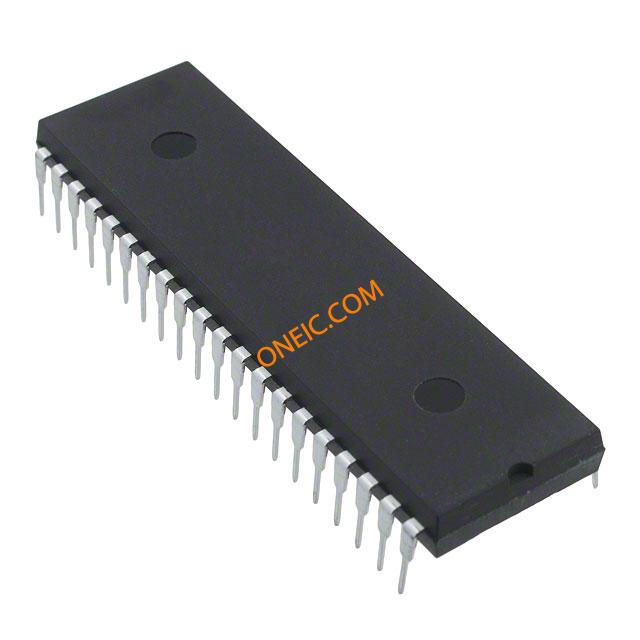
PIC18LF44K22-I/P

44-TQFP