PIC16F1613-I/SL
8-bit microcontrollers with flash memory in 14-pin SOIC packages
Manufacturer: microchip
series introduction
# PIC16F1613-I/SL Product Series Introduction
## 1. Overview
The PIC16F1613 - I/SL is a member of Microchip Technology's popular PIC16F microcontroller family. These microcontrollers are designed to offer a balance of performance, functionality, and cost - effectiveness, making them suitable for a wide range of embedded applications. The "I/SL" in the part number typically indicates a specific package type and other associated characteristics that are optimized for certain usage scenarios.
## 2. Key Features
### 2.1 CPU and Memory
- **CPU Core**: It is based on an enhanced Harvard architecture 8 - bit RISC CPU. This architecture allows for simultaneous access to program and data memory, enabling efficient execution of instructions. The CPU can operate at a maximum frequency of up to 32 MHz, which provides relatively high processing power for its class.
- **Program Memory**: The PIC16F1613 - I/SL comes with 14 KB of Flash program memory. Flash memory is non - volatile, meaning that the program code stored in it is retained even when the power is turned off. This allows for easy reprogramming during development and also provides long - term storage of the application code.
- **Data Memory**: It has 368 bytes of RAM (Random Access Memory). RAM is used for storing variables, intermediate results, and other data that the microcontroller needs to access quickly during program execution.
### 2.2 Peripherals
#### 2.2.1 GPIO (General - Purpose Input/Output)
- The microcontroller features a generous number of GPIO pins. These pins can be configured as either inputs or outputs, allowing for easy interfacing with external devices such as sensors, actuators, and displays. For example, a temperature sensor can be connected to an input GPIO pin, and an LED can be connected to an output GPIO pin.
- Some GPIO pins also support additional functions such as interrupts, which can be used to respond quickly to external events.
#### 2.2.2 Timers/Counters
- There are multiple timers and counters available on the PIC16F1613 - I/SL. These include 8 - bit and 16 - bit timers. Timers can be used for a variety of purposes, such as generating time delays, measuring time intervals, and generating periodic signals. For instance, a timer can be used to create a PWM (Pulse Width Modulation) signal to control the speed of a DC motor.
#### 2.2.3 Analog - to - Digital Converter (ADC)
- The device is equipped with a 10 - bit ADC. The ADC can convert analog input signals from external sensors (such as light sensors or potentiometers) into digital values that the microcontroller can process. This feature is extremely useful in applications where analog data needs to be measured and analyzed.
#### 2.2.4 Communication Interfaces
- **SPI (Serial Peripheral Interface)**: SPI is a high - speed serial communication interface that allows the microcontroller to communicate with other SPI - compatible devices, such as external memory chips or sensors. It uses a master - slave architecture and can transfer data at relatively high speeds.
- **I²C (Inter - Integrated Circuit)**: I²C is a multi - master, multi - slave serial communication protocol. It is commonly used for communicating with other integrated circuits on a printed circuit board, such as EEPROMs, sensors, and display drivers.
- **UART (Universal Asynchronous Receiver/Transmitter)**: UART is used for asynchronous serial communication, which is widely used for communication between the microcontroller and other devices such as computers, modems, or other microcontrollers.
## 3. Power Management
Images for reference
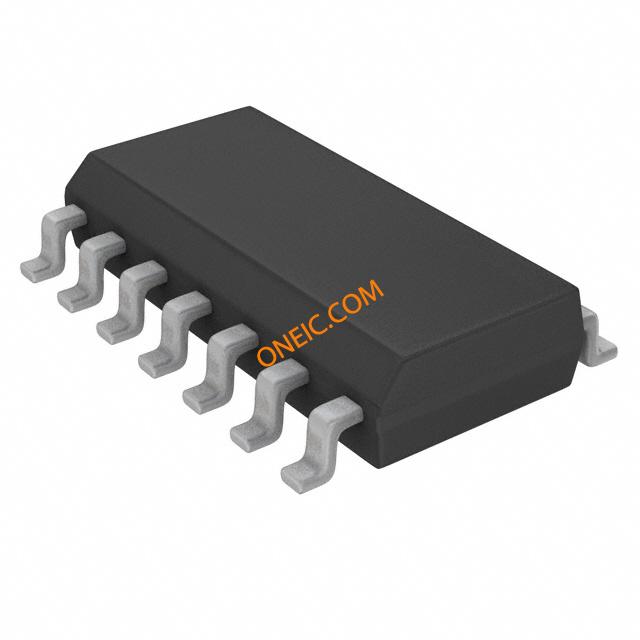
14-SOIC
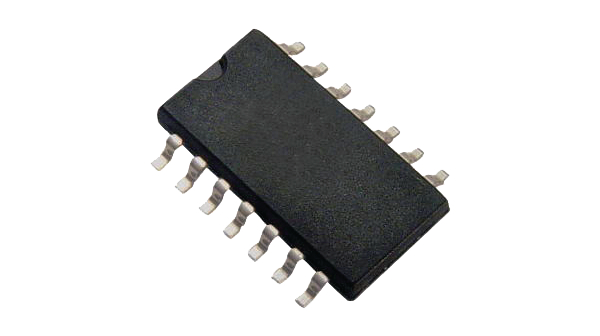
Image Preview
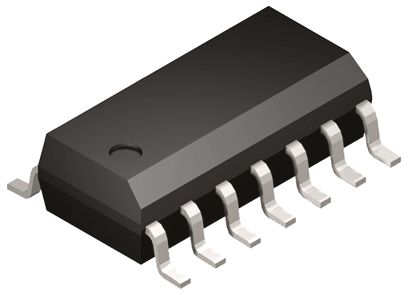
Image Preview