PIC12LF1840-I/MF
8-bit microcontrollers with 7KB Flash, 256B RAM, and 32MHz speed
Manufacturer: microchip
series introduction
# PIC12LF1840 - I/MF Product Series Introduction
## 1. Overview
The PIC12LF1840 - I/MF is a highly versatile and powerful product series within the Microchip Technology's PIC microcontroller family. These microcontrollers are designed to offer a cost - effective and efficient solution for a wide range of embedded applications. With their compact size, low power consumption, and rich set of features, they are well - suited for projects where space and energy efficiency are crucial factors.
## 2. Key Features
### 2.1 Architecture
- **8 - bit RISC Architecture**: The PIC12LF1840 - I/MF is based on an 8 - bit Reduced Instruction Set Computing (RISC) architecture. This architecture simplifies the instruction set, allowing for faster execution times and lower power consumption. It enables efficient code execution, making it easier for developers to write and optimize their programs.
- **High - Performance CPU**: The microcontroller features a high - performance central processing unit (CPU) that can operate at clock speeds up to 32 MHz. This high clock speed allows for rapid data processing and enables the microcontroller to handle complex tasks in a timely manner.
### 2.2 Memory
- **Program Memory**: It comes with up to 14 KB of Flash program memory. Flash memory is non - volatile, which means that the program code stored in it is retained even when the power is turned off. This allows for easy reprogramming of the microcontroller during development and in the field, making it suitable for applications that may require software updates over time.
- **Data Memory**: The PIC12LF1840 - I/MF has 368 bytes of Random Access Memory (RAM). This data memory is used for storing variables, intermediate results, and other data during program execution. The sufficient amount of RAM enables the microcontroller to handle moderately complex algorithms and data - processing tasks.
### 2.3 Peripherals
#### 2.3.1 Analog Peripherals
- **Analog - to - Digital Converter (ADC)**: The microcontroller is equipped with a 10 - bit ADC with up to 7 input channels. The ADC allows the microcontroller to convert analog signals from sensors (such as temperature sensors, light sensors, etc.) into digital values that can be processed by the CPU. This feature is essential for applications that require the measurement of analog quantities.
- **Comparator Module**: It includes a comparator module that can be used for comparing two analog voltages. The comparator can be configured to generate interrupts based on the comparison result, which is useful for applications such as over - voltage protection and signal threshold detection.
#### 2.3.2 Digital Peripherals
- **Universal Synchronous/Asynchronous Receiver/Transmitter (USART)**: The USART module enables serial communication with other devices, such as computers, sensors, or actuators. It supports both synchronous and asynchronous communication modes, allowing for flexible data transfer at various baud rates.
- **Serial Peripheral Interface (SPI)**: The SPI interface provides a high - speed serial communication protocol for communicating with external devices such as EEPROMs, sensors, and displays. It allows for fast data transfer between the microcontroller and other SPI - compatible devices.
- **Inter - Integrated Circuit (I²C) Interface**: The I²C interface is a widely used serial communication protocol for connecting multiple devices on a single bus. It is useful for communicating with devices such as sensors, real - time clocks, and EEPROMs in a multi - device system.
### 2.4 Low - Power Operation
- **Multiple Power Modes**: The PIC12LF1840 - I/MF offers multiple power modes, including Sleep mode, Idle
Images for reference

8-VDFN
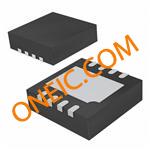
Image Preview
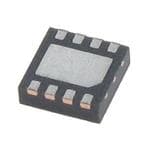
Image Preview