PIC10F206
Compact 8-bit PIC microcontrollers with flash memory and versatile I/O options
Manufacturer: microchip
series introduction
# PIC10F206 Product Series Introduction
## 1. Overview
The PIC10F206 is a member of Microchip Technology's popular PIC microcontroller family. These microcontrollers are renowned for their high - performance, low - cost, and low - power consumption characteristics, making them ideal for a wide range of embedded applications. The PIC10F206 series is specifically designed to offer a balance between functionality and simplicity, catering to both novice and experienced developers.
## 2. Key Features
### 2.1 Architecture
- **8 - bit RISC Architecture**: The PIC10F206 is based on an 8 - bit Reduced Instruction Set Computing (RISC) architecture. This architecture simplifies the instruction set, allowing for faster execution times and reduced code size. With a single - cycle execution for most instructions, it can perform operations quickly, enhancing the overall performance of the system.
- **Harvard Architecture**: It utilizes the Harvard architecture, which separates the program memory and data memory. This enables simultaneous access to instructions and data, improving the efficiency of the microcontroller.
### 2.2 Memory
- **Program Memory**: The PIC10F206 comes with 512 words of Flash program memory. Flash memory is non - volatile, meaning that the program code stored in it is retained even when the power is turned off. This allows for easy reprogramming during development and ensures the stability of the application in the long run.
- **Data Memory**: It has 25 bytes of Random - Access Memory (RAM). This data memory is used to store variables, intermediate results, and other data during the execution of the program. The sufficient amount of RAM enables the implementation of moderately complex algorithms.
### 2.3 I/O Ports
- **General - Purpose I/O Pins**: The PIC10F206 features a total of 5 general - purpose input/output (GPIO) pins. These pins can be configured as either inputs or outputs, providing flexibility in interfacing with external devices such as sensors, switches, and actuators. For example, an input pin can be used to read the state of a push - button switch, while an output pin can be used to control an LED.
- **Pin - Level Configuration**: The I/O pins can be individually configured, allowing for customized input/output behavior. This is useful in applications where different pins need to perform different functions.
### 2.4 Peripherals
- **Timer/Counter**: It includes a 16 - bit timer/counter module. This timer can be used for various purposes, such as generating time delays, measuring time intervals, and implementing periodic tasks. For instance, it can be used to create a blinking LED effect by toggling an output pin at regular intervals.
- **Watchdog Timer (WDT)**: The watchdog timer is a safety feature that helps prevent the microcontroller from getting stuck in an infinite loop or malfunctioning due to software glitches. If the program fails to reset the watchdog timer within a specified time period, the microcontroller will be reset, ensuring the reliability of the system.
### 2.5 Low - Power Operation
- **Multiple Power Modes**: The PIC10F206 supports multiple power modes, including active mode, idle mode, and sleep mode. In active mode, the microcontroller operates at full speed, while in idle mode, the CPU is halted but the peripherals can still operate. Sleep mode is the lowest - power mode, where the microcontroller consumes minimal power and can be awakened by an external interrupt. This makes it suitable for battery - powered applications, as it helps to extend the battery life.
## 3. Development Tools
- **MPLAB X IDE**: Microchip provides the MPLAB X Integrated Development Environment (IDE), which is a
Images for reference
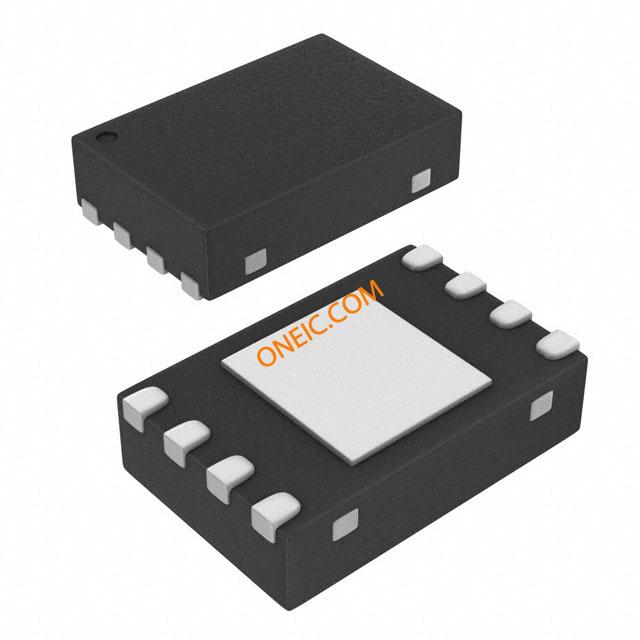
8-VFDFN Exposed Pad
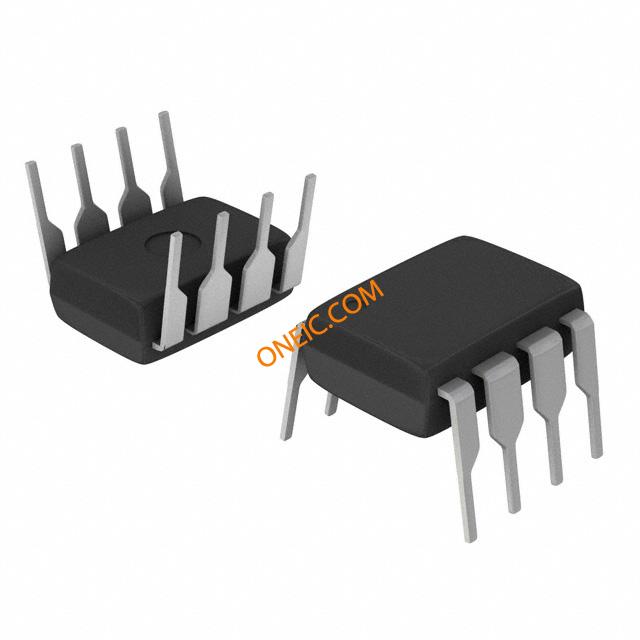
8-DIP

SOT-23-6