P89LPC930FDH
8-bit microcontrollers with 4KB flash memory for embedded systems
Manufacturer: nxp
series introduction
# Introduction to the P89LPC930FDH Product Series
## 1. Overview
The P89LPC930FDH product series represents a remarkable line of microcontrollers developed by NXP Semiconductors. These microcontrollers are designed to offer a high - level of integration, performance, and flexibility, making them suitable for a wide range of applications in the embedded systems domain.
## 2. Key Features
### 2.1 Microcontroller Core
- **80C51 Compatibility**: The P89LPC930FDH is based on the industry - standard 80C51 core. This compatibility allows developers to leverage a vast existing code base and development tools, significantly reducing the learning curve and development time.
- **Enhanced Instruction Set**: It features an enhanced instruction set that provides faster execution times compared to traditional 80C51 microcontrollers. This improvement enables more complex algorithms to be implemented efficiently, enhancing the overall performance of the system.
### 2.2 Memory
- **Flash Memory**: The series comes with on - chip Flash memory, which provides non - volatile storage for the program code. The P89LPC930FDH typically offers a sufficient amount of Flash memory, allowing developers to store large and complex applications. This Flash memory can be easily reprogrammed, enabling in - system programming (ISP) and in - application programming (IAP), which is highly beneficial for product updates and customization.
- **Data Memory**: It also includes a certain amount of on - chip data memory (RAM). This RAM is used for storing variables, intermediate results, and stack operations during program execution. The available data memory size is adequate for most embedded applications, ensuring smooth operation of the microcontroller.
### 2.3 Peripherals
#### 2.3.1 Serial Communication
- **UART (Universal Asynchronous Receiver - Transmitter)**: The P89LPC930FDH is equipped with a UART module, which enables asynchronous serial communication. This is useful for communicating with other devices such as sensors, displays, and communication modules. It supports a wide range of baud rates, allowing for flexible communication configurations.
- **I²C (Inter - Integrated Circuit) Interface**: The I²C interface is another important serial communication peripheral. It provides a simple and efficient way to connect multiple devices on a single bus. This is commonly used for connecting sensors, EEPROMs, and other I²C - compatible devices, reducing the number of pins required for communication.
#### 2.3.2 Timers/Counters
- Multiple timers/counters are available in the P89LPC930FDH. These timers can be used for various purposes, such as generating accurate time delays, measuring time intervals, and generating pulse - width modulation (PWM) signals. PWM signals are particularly useful for controlling motors, LEDs, and other devices that require variable power control.
#### 2.3.3 Analog - to - Digital Converter (ADC)
- The inclusion of an ADC in the P89LPC930FDH allows the microcontroller to interface with analog sensors. It can convert analog signals from sensors such as temperature sensors, light sensors, and pressure sensors into digital values that can be processed by the microcontroller. This enables the development of applications that require real - time monitoring and control of analog variables.
### 2.4 Power Management
- **Low - Power Modes**: The P89LPC930FDH series offers multiple low - power modes, including idle mode and power - down mode. In idle mode, the CPU is halted while the peripherals continue to operate, consuming less power. In power - down mode, the microcontroller enters a deep sleep state, consuming minimal power.
Images for reference

28-TSSOP
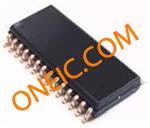
Image Preview

Image Preview