P89LPC915FDH
8-bit 80C51 microcontrollers with 2KB flash, 256B RAM, 14-pin TSSOP
Manufacturer: nxp
series introduction
# Introduction to the P89LPC915FDH Product Series
## 1. Overview
The P89LPC915FDH product series represents a remarkable line of microcontrollers developed by NXP Semiconductors. These microcontrollers are designed to offer a high - level of performance, flexibility, and reliability, making them suitable for a wide range of applications in the embedded systems domain.
## 2. Key Features
### 2.1. Microcontroller Core
- **80C51 Compatibility**: The P89LPC915FDH is based on the industry - standard 80C51 core. This compatibility allows developers to leverage a vast existing code base and development tools, significantly reducing the learning curve and development time. It also enables seamless integration with legacy systems.
- **Enhanced Instruction Set**: Along with the basic 80C51 instruction set, it comes with an enhanced instruction set that provides faster execution of common tasks. This results in improved overall system performance and efficiency.
### 2.2. Memory
- **Flash Memory**: It is equipped with a generous amount of on - chip Flash memory. The Flash memory allows for easy reprogramming of the microcontroller, which is crucial for product development, debugging, and field upgrades. The non - volatile nature of Flash memory ensures that the program code is retained even when the power is turned off.
- **Data Memory**: The microcontroller has sufficient on - chip data memory (RAM) to handle various data storage and manipulation requirements during program execution. This includes variables, buffers, and intermediate results.
### 2.3. Peripherals
- **Serial Communication Interfaces**:
- **UART (Universal Asynchronous Receiver - Transmitter)**: The UART interface enables asynchronous serial communication, which is widely used for communication between the microcontroller and other devices such as sensors, displays, and computers. It supports different baud rates, allowing for flexible communication configurations.
- **SPI (Serial Peripheral Interface)**: The SPI interface provides a high - speed synchronous serial communication option. It is commonly used for communicating with external devices like EEPROMs, ADCs, and DACs, enabling fast data transfer between the microcontroller and these peripherals.
- **Timers/Counters**: Multiple timers and counters are available on the P89LPC915FDH. These can be used for a variety of purposes, such as generating accurate time delays, measuring time intervals, and generating PWM (Pulse Width Modulation) signals. PWM signals are useful for controlling the speed of motors, adjusting the brightness of LEDs, and other applications that require analog - like control.
- **Analog - to - Digital Converter (ADC)**: The built - in ADC allows the microcontroller to convert analog signals from sensors (such as temperature sensors, light sensors, etc.) into digital values. This enables the microcontroller to interface with the real - world analog environment and make decisions based on the measured values.
### 2.4. Power Management
- **Low - Power Modes**: The P89LPC915FDH offers several low - power modes, including idle mode and power - down mode. In idle mode, the CPU is halted while the peripherals continue to operate, which can save power when the CPU is not actively processing data. In power - down mode, the microcontroller consumes minimal power, making it suitable for battery - powered applications where power conservation is critical.
## 3. Package and Pinout
- **Package Type**: The P89LPC915FDH is available in a specific package type that provides a convenient way to mount the microcontroller on a printed circuit board (PCB). The package is designed to ensure good electrical connectivity and mechanical stability.
- **Pinout Configuration
Images for reference
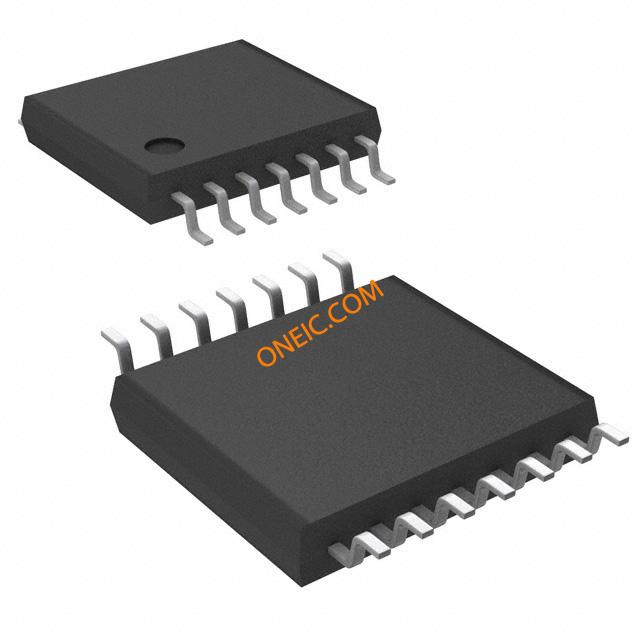
14-TSSOP
Image Preview

Image Preview