MSP430F413IPM
16-bit ultra-low-power microcontrollers with 8KB flash and 64-pin LQFP packaging
Manufacturer: ti
series introduction
# Introduction to the MSP430F413IPM Product Series
## 1. Overview
The MSP430F413IPM belongs to the MSP430 family of ultra - low - power mixed - signal microcontrollers developed by Texas Instruments. This product series is designed to meet the requirements of a wide range of applications, especially those that demand high energy efficiency, reliable performance, and cost - effectiveness.
## 2. Key Features
### 2.1 Ultra - Low - Power Design
- **Multiple Power Modes**: The MSP430F413IPM offers several power modes, including active mode, standby mode, and various sleep modes. In standby mode, the microcontroller can consume as little as a few microamps of current, while still maintaining critical system information. This makes it ideal for battery - powered applications such as wireless sensors, portable medical devices, and remote monitoring systems.
- **Dynamic Power Management**: The device can quickly transition between different power modes based on the system's requirements. For example, it can wake up from a low - power sleep mode in a matter of microseconds to handle incoming data or perform a specific task, and then return to a low - power state to conserve energy.
### 2.2 High - Performance CPU
- **16 - Bit RISC Architecture**: The MSP430F413IPM is equipped with a 16 - bit reduced instruction set computer (RISC) CPU. This architecture provides a high level of processing power while keeping the instruction set simple and efficient. It allows for fast execution of code, enabling the microcontroller to handle complex tasks such as data processing, control algorithms, and communication protocols.
- **Fast Clock Speeds**: The CPU can operate at relatively high clock speeds, up to several megahertz. This enables the microcontroller to perform real - time operations and respond quickly to external events.
### 2.3 Integrated Peripherals
#### 2.3.1 Timer Modules
- **Multiple Timer Options**: The MSP430F413IPM includes several timer modules, such as the Timer_A and Timer_B. These timers can be used for a variety of purposes, including generating accurate time delays, pulse width modulation (PWM) for motor control, and capturing external events.
- **Flexible Configuration**: The timer modules can be configured in different modes, such as up - counting, down - counting, and continuous - counting modes. This flexibility allows developers to customize the timer behavior according to their specific application requirements.
#### 2.3.2 Serial Communication Interfaces
- **UART and SPI Support**: The microcontroller features universal asynchronous receiver - transmitter (UART) and serial peripheral interface (SPI) communication interfaces. The UART interface is commonly used for serial communication with other devices, such as computers, sensors, and actuators, using the RS - 232 or RS - 485 protocols. The SPI interface, on the other hand, provides a high - speed, synchronous communication option for connecting to external devices such as memory chips, displays, and sensors.
#### 2.3.3 Analog - to - Digital Converter (ADC)
- **On - Chip ADC**: The MSP430F413IPM is integrated with an analog - to - digital converter (ADC). This ADC allows the microcontroller to convert analog signals from sensors, such as temperature sensors, pressure sensors, and light sensors, into digital values that can be processed by the CPU. The ADC typically has a high resolution and a fast conversion rate, enabling accurate and real - time data acquisition.
## 3. Memory and Storage
### 3.1 Flash Memory
- **Program Memory**: The MSP430F413IPM
Images for reference
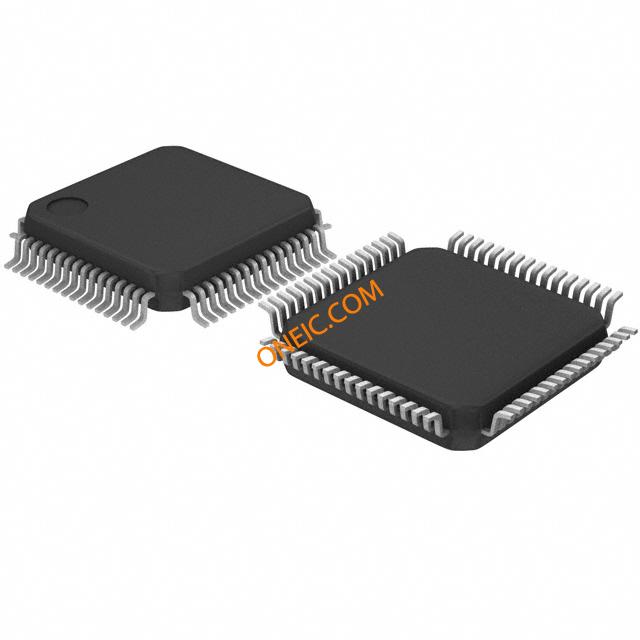
64-LQFP
Image Preview
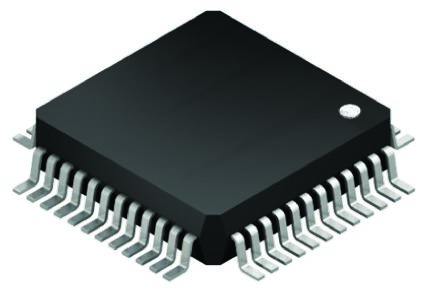
Image Preview