MCP2515-I/SO
CAN controller ICs with SPI interface for industrial applications
Manufacturer: microchip
series introduction
# Introduction to the MCP2515 - I/SO Product Series
## 1. Overview
The MCP2515 - I/SO is a highly versatile and widely - used product series in the field of automotive and industrial communication. It is a stand - alone Controller Area Network (CAN) controller with an SPI (Serial Peripheral Interface) interface. This device is designed to simplify the integration of CAN communication into microcontroller - based systems, offering a cost - effective and efficient solution for various applications.
## 2. Key Features
### 2.1 CAN Compatibility
- **CAN 2.0B Compliance**: The MCP2515 - I/SO fully adheres to the CAN 2.0B active specification. This means it can communicate with other CAN - compliant devices in a network, supporting both standard (11 - bit) and extended (29 - bit) message identifiers. This flexibility allows it to be used in a wide range of CAN - based systems, from automotive in - vehicle networks to industrial automation setups.
- **High - Speed Communication**: It can operate at data rates up to 1 Mbps, enabling fast and reliable data transfer within the CAN network. This high - speed capability is crucial for applications where real - time data exchange is required, such as in automotive engine control units or industrial monitoring systems.
### 2.2 SPI Interface
- **Easy Integration**: The SPI interface simplifies the connection between the MCP2515 - I/SO and a microcontroller. SPI is a widely supported interface in many microcontrollers, allowing for seamless integration without the need for complex additional hardware. This reduces the overall system cost and development time.
- **High - Speed Data Transfer**: The SPI interface provides a relatively high - speed data transfer rate between the CAN controller and the microcontroller. This enables the microcontroller to quickly access and manage the CAN messages stored in the MCP2515 - I/SO, improving the overall system responsiveness.
### 2.3 Message Buffering
- **Dual Receive Buffers**: The device is equipped with two independent receive buffers. These buffers can store incoming CAN messages, allowing the microcontroller to process the data at its own pace. This is particularly useful in high - traffic CAN networks where messages may arrive more quickly than the microcontroller can handle them.
- **Three Transmit Buffers**: There are also three transmit buffers available. These buffers can hold outgoing CAN messages, enabling the MCP2515 - I/SO to manage message transmission efficiently. The microcontroller can pre - load messages into the transmit buffers and let the CAN controller handle the actual transmission, reducing the microcontroller's workload.
### 2.4 Interrupt Capability
- **Flexible Interrupt Sources**: The MCP2515 - I/SO offers multiple interrupt sources, including receive buffer full, transmit buffer empty, and error conditions. This allows the microcontroller to be notified immediately when important events occur in the CAN network, enabling real - time response and efficient system operation.
- **Interrupt Masking**: The device also supports interrupt masking, which means the microcontroller can selectively enable or disable specific interrupt sources. This provides greater control over the interrupt handling process and helps to optimize the system's performance.
### 2.5 Low - Power Operation
- **Sleep Mode**: The MCP2515 - I/SO has a sleep mode that significantly reduces power consumption when the device is not actively communicating. This is especially important in battery - powered applications or systems where power efficiency is a critical factor. The device can quickly wake up from sleep mode in response to incoming CAN messages or other events.
## 3. Applications
### 3.1 Automotive
- **In - Vehicle Networks**: In modern automobiles, the MCP2515 -
Images for reference
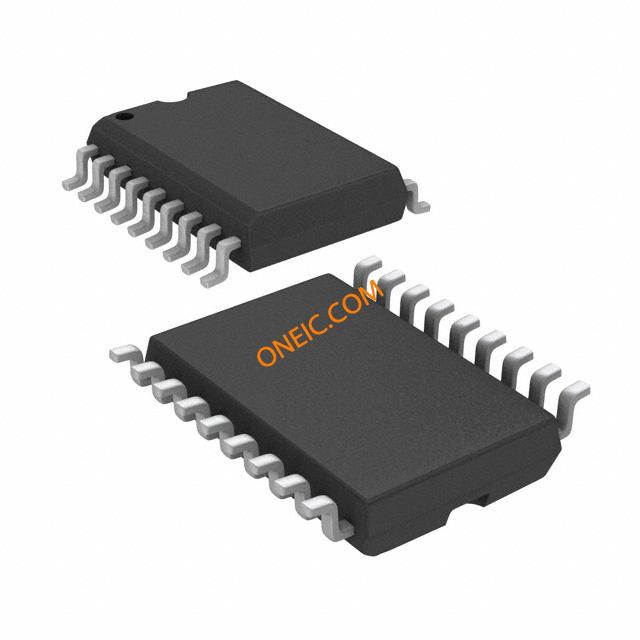
18-SOIC

18-SOIC,DW

Image Preview