MCIMX287CVM4B
ARM-based 32-bit processors for low-power specialized applications
Manufacturer: ['freescale', 'nxp']
series introduction
# Introduction to the MCIMX287CVM4B Product Series
## 1. Overview
The MCIMX287CVM4B is part of a high - performance and feature - rich product series developed by NXP Semiconductors. This series is designed to meet the diverse needs of embedded systems across a wide range of industries, offering a balance of power, functionality, and cost - effectiveness.
## 2. Key Features
### 2.1 Processor Core
- **ARM926EJ - S Core**: At the heart of the MCIMX287CVM4B is an ARM926EJ - S processor core. This core operates at a clock speed of up to 454 MHz, providing sufficient computing power for a variety of applications. It supports the Thumb instruction set, which helps in reducing code size and improving memory efficiency. The core also features a 5 - stage pipeline and a Harvard architecture, enabling high - speed instruction execution and data processing.
- **Memory Management Unit (MMU)**: The integrated MMU allows for efficient memory management, enabling the separation of virtual and physical memory. This feature is crucial for running operating systems such as Linux, as it provides memory protection and enables the use of multi - tasking environments.
### 2.2 Memory
- **External Memory Interfaces**: The MCIMX287CVM4B supports multiple external memory interfaces, including SDRAM, NAND Flash, and NOR Flash. This flexibility allows developers to choose the most suitable memory type based on their application requirements. For example, SDRAM can be used for high - speed data storage during runtime, while NAND Flash is ideal for large - capacity non - volatile storage.
- **Internal Memory**: It also has a small amount of internal SRAM, which can be used for storing critical data and code segments that require fast access. This internal SRAM helps in reducing the access time and improving the overall system performance.
### 2.3 Peripherals
- **Communication Interfaces**:
- **UART (Universal Asynchronous Receiver - Transmitter)**: Multiple UART ports are available, which are commonly used for serial communication with other devices such as sensors, modems, and displays. These UART ports support various baud rates and can be configured for different communication protocols.
- **SPI (Serial Peripheral Interface)**: The SPI interface allows for high - speed serial communication between the microcontroller and external devices such as SPI - based sensors, memory chips, and displays. It supports multiple slave devices and can operate in different modes.
- **I2C (Inter - Integrated Circuit)**: The I2C interface is used for communicating with low - speed devices such as EEPROMs, sensors, and other I2C - compatible chips. It provides a simple and efficient way to connect multiple devices on a single bus.
- **USB (Universal Serial Bus)**: The MCIMX287CVM4B has USB interfaces, including USB Host and USB Device. The USB Host interface can be used to connect external USB devices such as keyboards, mice, and USB storage devices, while the USB Device interface allows the microcontroller to act as a USB device when connected to a host computer.
- **Display Interface**: It features a display interface that supports various types of displays, including TFT LCDs. This interface can be used to create graphical user interfaces (GUIs) for applications such as industrial control panels, consumer electronics, and automotive infotainment systems.
- **GPIO (General - Purpose Input/Output) Pins**: A large number of GPIO pins are available, which can be used for a variety of purposes such as controlling external devices, reading sensor inputs, and interfacing with other circuits. These GPIO pins can be configured as either input or
Images for reference

MCIMX280DVM4B
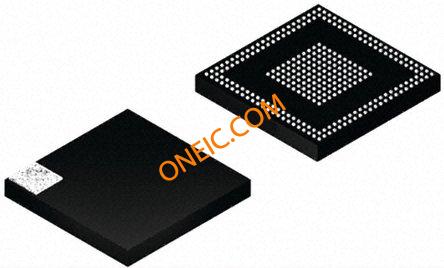
Image Preview
Image Preview