MC9S08SH32CTJ
8-bit microcontrollers with 32KB flash memory in 20-pin TSSOP format
Manufacturer: ['freescale', 'nxp']
series introduction
# Introduction to the MC9S08SH32CTJ Product Series
## 1. Overview
The MC9S08SH32CTJ is a highly versatile and powerful microcontroller product series developed by Freescale (now NXP Semiconductors). It belongs to the S08 family, which is well - known for its cost - effectiveness, low power consumption, and rich set of integrated peripherals. This series is designed to meet the diverse requirements of various embedded applications, ranging from consumer electronics to industrial control systems.
## 2. Key Features
### 2.1 Core and Memory
- **CPU Core**: The MC9S08SH32CTJ is based on the HCS08 CPU core. This 8 - bit core offers a good balance between performance and power consumption. It has a simple yet efficient instruction set architecture, which allows for fast execution of code and easy programming.
- **Flash Memory**: It is equipped with 32 KB of in - system programmable flash memory. This non - volatile memory can store the application code, and its in - system programming capability enables easy firmware updates during the product's lifecycle.
- **RAM**: The microcontroller has 2 KB of random - access memory (RAM). This RAM is used for storing variables, intermediate results, and stack operations during program execution.
### 2.2 Peripherals
#### 2.2.1 Timer Modules
- **Flexible Timer Module (FTM)**: The FTM provides multiple channels that can be configured for various timer functions such as pulse - width modulation (PWM), input capture, and output compare. PWM is widely used in applications like motor control, where it can be used to control the speed and direction of a motor by adjusting the duty cycle of the PWM signal.
- **Real - Time Counter (RTC)**: The RTC is a low - power timer that can keep track of time even when the main microcontroller is in a low - power mode. It is useful for applications that require time - stamping, such as data loggers and clock - based control systems.
#### 2.2.2 Communication Interfaces
- **Serial Communication Interface (SCI)**: The SCI provides asynchronous serial communication, which is commonly used for communication between the microcontroller and other devices such as sensors, displays, or other microcontrollers. It supports standard baud rates and can be configured for full - duplex or half - duplex communication.
- **Inter - Integrated Circuit (I2C) Interface**: The I2C interface is a multi - master, multi - slave serial communication protocol. It is widely used for connecting low - speed peripherals such as EEPROMs, sensors, and other integrated circuits. The I2C interface on the MC9S08SH32CTJ allows for easy integration of these devices into the system.
- **Serial Peripheral Interface (SPI)**: The SPI is a high - speed serial communication interface that is used for communicating with external devices such as flash memories, ADCs, and DACs. It supports full - duplex communication and can achieve high data transfer rates.
#### 2.2.3 Analog - to - Digital Converter (ADC)
The MC9S08SH32CTJ features a 10 - bit ADC with multiple input channels. This ADC can convert analog signals from sensors such as temperature sensors, pressure sensors, and light sensors into digital values that can be processed by the microcontroller. The 10 - bit resolution provides a good balance between accuracy and conversion speed.
### 2.3 Power Management
- **Low - Power Modes**: The microcontroller offers several low - power modes, including wait mode and stop mode. In wait mode, the CPU stops executing instructions while the peripherals can continue to operate. In stop mode, the
Images for reference
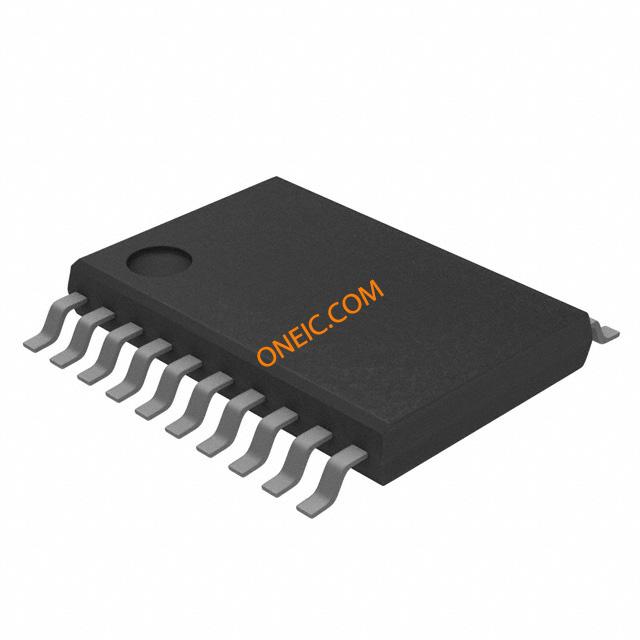
20-TSSOP
Image Preview

Image Preview