MC9S08SH16CTLR
8-bit microcontrollers with 16KB flash memory in 28-pin TSSOP format
Manufacturer: ['freescale', 'nxp']
series introduction
# Introduction to the MC9S08SH16CTLR Product Series
## 1. Overview
The MC9S08SH16CTLR belongs to the MC9S08SH product family, which is a line of microcontrollers developed by NXP Semiconductors. These microcontrollers are designed to offer a cost - effective, high - performance solution for a wide range of embedded applications. The "MC9S08SH16CTLR" specifically is a member with unique features and capabilities that make it suitable for various industrial, consumer, and automotive applications.
## 2. Core and Architecture
### 2.1 CPU Core
- The MC9S08SH16CTLR is based on the HCS08 CPU core. This 8 - bit core offers a good balance between performance and power consumption. It has a simple yet efficient instruction set architecture, which allows for fast execution of code. The core can operate at a maximum frequency of up to 20 MHz, enabling it to handle moderately complex tasks in a timely manner.
- It features a single - cycle instruction execution for most common operations, which significantly improves the overall processing speed. This is crucial for applications that require real - time response, such as motor control and sensor data processing.
### 2.2 Memory Architecture
- **Flash Memory**: It is equipped with 16 KB of in - system programmable flash memory. This non - volatile memory is used to store the application code. The flash memory has a high endurance, allowing for multiple programming and erasing cycles, which is useful during the development and debugging phases as well as in long - term production use.
- **Random - Access Memory (RAM)**: The microcontroller has 1 KB of RAM. This memory is used for storing temporary data during program execution, such as variables, stack, and buffers. The sufficient amount of RAM enables the handling of moderately sized data sets and complex algorithms.
- **EEPROM**: There is also 128 bytes of EEPROM available. EEPROM is non - volatile and can be used to store critical data that needs to be retained even when the power is turned off, such as calibration data, configuration settings, and user preferences.
## 3. Peripherals
### 3.1 Serial Communication Interfaces
- **Serial Peripheral Interface (SPI)**: The MC9S08SH16CTLR includes an SPI module, which allows for high - speed serial communication between the microcontroller and other devices such as sensors, displays, or external memory chips. The SPI interface supports master and slave modes, enabling flexible system design.
- **Inter - Integrated Circuit (I2C)**: An I2C interface is also provided. This is a widely used serial communication protocol for connecting low - speed devices in a multi - master or master - slave configuration. It is useful for communicating with sensors, EEPROMs, and other I2C - compatible devices.
- **Universal Asynchronous Receiver/Transmitter (UART)**: The UART interface enables asynchronous serial communication, which is commonly used for communication with computers, modems, and other serial devices. It supports various baud rates, allowing for seamless integration with different communication systems.
### 3.2 Timer Modules
- There are multiple timer modules available in the MC9S08SH16CTLR. These timers can be used for a variety of purposes, such as generating accurate time delays, measuring time intervals, and controlling PWM (Pulse - Width Modulation) signals.
- The PWM functionality is particularly useful for motor control applications, where the duty cycle of the PWM signal can be adjusted to control the speed and direction of the motor.
### 3.3 Analog - to - Digital Converter (ADC)
- The microcontroller features a 10 -
Images for reference

28-TSSOP
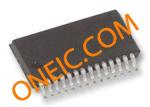
Image Preview

Image Preview