MC68HC11E0CFNE2
8-bit microcontrollers with 512B RAM, 2MHz, 52-pin PLCC packaging
Manufacturer: ['freescale', 'nxp']
series introduction
# Introduction to the MC68HC11E0CFNE2 Product Series
## 1. Overview
The MC68HC11E0CFNE2 belongs to the MC68HC11 family of microcontrollers developed by Motorola (now NXP Semiconductors). This product series is renowned for its reliability, versatility, and cost - effectiveness, making it a popular choice in a wide range of embedded systems applications.
## 2. Key Features
### 2.1 CPU Core
- **8 - bit Architecture**: The MC68HC11E0CFNE2 is based on an 8 - bit CPU core. This architecture strikes a balance between simplicity and performance, making it suitable for applications that do not require extremely high - end processing power but need efficient execution of basic tasks.
- **Enhanced Instruction Set**: It comes with an enhanced instruction set that includes arithmetic, logical, and data transfer instructions. This allows for efficient programming and implementation of various algorithms, such as control algorithms in industrial automation or signal processing routines in simple sensor systems.
### 2.2 Memory
- **On - Chip Memory**:
- **RAM**: The microcontroller is equipped with a certain amount of on - chip Random Access Memory (RAM). This RAM is used for temporary data storage during program execution, such as storing variables, intermediate results of calculations, and buffer data.
- **ROM/EPROM/EEPROM**: It also has on - chip Read - Only Memory (ROM), Erasable Programmable Read - Only Memory (EPROM), or Electrically Erasable Programmable Read - Only Memory (EEPROM). The ROM stores the program code that the microcontroller executes, while the EEPROM can be used for non - volatile data storage, such as configuration parameters that need to be retained even when the power is turned off.
- **Memory Addressing**: The MC68HC11E0CFNE2 supports a specific memory addressing scheme, which enables the CPU to access different memory locations efficiently. This is crucial for proper program execution and data handling.
### 2.3 Peripherals
- **Timer/Counter Modules**:
- Multiple timer/counter modules are integrated into the microcontroller. These timers can be used for various purposes, such as generating accurate time delays, measuring time intervals, and generating pulse - width modulation (PWM) signals. PWM signals are widely used in motor control applications to control the speed and direction of motors.
- **Serial Communication Interfaces**:
- It features serial communication interfaces, such as Serial Peripheral Interface (SPI) and Universal Asynchronous Receiver/Transmitter (UART). The SPI interface allows for high - speed serial communication between the microcontroller and other devices, such as sensors or external memory chips. The UART interface is commonly used for communication with other serial devices, such as computers or other microcontrollers, using standard serial protocols.
- **Analog - to - Digital Converter (ADC)**:
- An on - chip ADC is provided, which can convert analog input signals into digital values. This is useful in applications where analog sensors are used, such as temperature sensors, pressure sensors, or light sensors. The microcontroller can then process the digital data obtained from the ADC to make decisions or perform further calculations.
### 2.4 Power Management
- **Low - Power Modes**: The MC68HC11E0CFNE2 offers low - power modes, which are essential for battery - powered applications. In these low - power modes, the microcontroller consumes less power by reducing the clock frequency or shutting down certain non - essential peripherals. This helps to extend the battery life of the device.
## 3. Applications
### 3.1 Industrial Automation
- In industrial automation systems, the MC68HC11E0CF
Images for reference

52-LCC
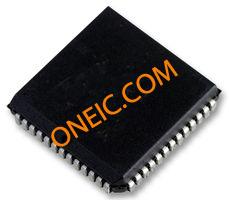
Image Preview
Image Preview