M74HC148TTR
8-to-3 line priority encoder IC in 16-pin TSSOP package
Manufacturer: stm
series introduction
# Introduction to the M74HC148TTR Product Series
## 1. Overview
The M74HC148TTR belongs to the 74HC series of high - speed CMOS logic integrated circuits. It is an 8 - to - 3 priority encoder, which is a crucial component in digital electronics systems. This device combines the advantages of high - speed operation and low power consumption, making it suitable for a wide range of applications in modern electronic designs.
## 2. Key Features
### 2.1 High - Speed Operation
The M74HC148TTR is designed to operate at high speeds, with propagation delays typically in the range of a few nanoseconds. This high - speed performance allows it to handle rapid changes in input signals, making it ideal for applications where real - time processing is required, such as in high - speed data acquisition systems and fast - paced communication interfaces.
### 2.2 Low Power Consumption
As a CMOS device, the M74HC148TTR consumes very low power compared to traditional TTL (Transistor - Transistor Logic) devices. This low power characteristic is beneficial for battery - powered applications, as it helps to extend the battery life. It also reduces heat generation, which can improve the overall reliability and stability of the system.
### 2.3 Wide Supply Voltage Range
The device can operate over a wide supply voltage range, typically from 2V to 6V. This flexibility allows it to be used in various power supply environments, making it compatible with different types of power sources and system designs.
### 2.4 Compatibility
The M74HC148TTR has an output that is compatible with both TTL and CMOS logic levels. This means that it can be easily interfaced with other logic devices in a mixed - logic system, providing greater design flexibility.
### 2.5 Priority Encoding Function
One of the most important features of the M74HC148TTR is its priority encoding function. It can accept up to eight active - low input signals and encode the highest - priority active input into a three - bit binary output. This is useful in applications where multiple input sources need to be prioritized, such as in interrupt handling systems in microcontrollers.
## 3. Pin Configuration and Functionality
### 3.1 Pinout
The M74HC148TTR is typically available in a small - outline integrated circuit (SOIC) package. It has a total of 16 pins, each with a specific function:
- **Input Pins (I0 - I7)**: These are the eight active - low input pins. When an input pin is pulled low, it indicates an active input signal.
- **Enable Input (EI)**: This is an active - low enable pin. When EI is low, the encoder is enabled, and it will process the input signals. When EI is high, the encoder is disabled, and all outputs are set to a high - impedance state.
- **Output Pins (A0 - A2)**: These are the three - bit binary output pins that represent the encoded value of the highest - priority active input.
- **Output Enable (GS)**: This is an active - low output enable pin. It indicates whether there is a valid input being encoded. When GS is low, it means that at least one of the input pins is active.
- **No - Input Indicator (EO)**: This is an active - low output pin that indicates when there are no active inputs. When EO is low, it means that all input pins are high (inactive).
### 3.2 Encoding Logic
The encoder works by first checking the enable input (EI). If EI is low, it then scans
Images for reference
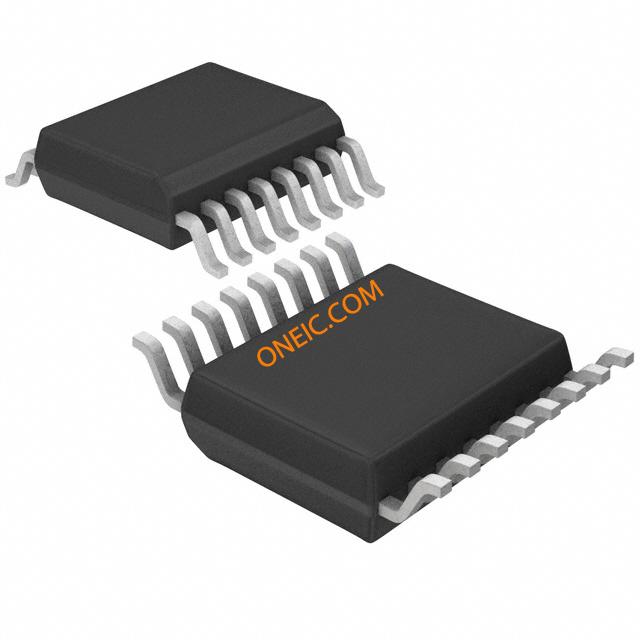
16-TSSOP

Image Preview