LPC3250FET296
ARM-based 16/32-bit microcontrollers with USB, 266MHz, and TFBGA packaging
Manufacturer: nxp
series introduction
# Introduction to the LPC3250FET296 Product Series
## 1. Overview
The LPC3250FET296 is a highly advanced and versatile product series that belongs to the realm of microcontrollers. It is designed to meet the diverse and demanding requirements of modern embedded systems, offering a comprehensive set of features and capabilities that make it suitable for a wide range of applications.
## 2. Key Features
### 2.1 Processor Core
- **High - Performance ARM Core**: The LPC3250FET296 is built around a powerful ARM processor core. This core provides high - speed processing capabilities, enabling the device to handle complex tasks efficiently. It can execute instructions at a fast clock speed, which is crucial for applications that require real - time processing, such as industrial automation and automotive control systems.
- **Advanced Instruction Set**: The ARM core supports an advanced instruction set that includes features like floating - point operations. This allows for accurate and efficient mathematical computations, making it ideal for applications in scientific research, medical devices, and signal processing.
### 2.2 Memory
- **On - Chip Memory**: It comes with a significant amount of on - chip memory, including both Flash memory and SRAM. The Flash memory is used for storing the program code, while the SRAM provides fast access storage for data during runtime. This combination ensures that the device can operate independently without the need for external memory in many cases, reducing the overall system cost and complexity.
- **Memory Expansion Options**: In addition to the on - chip memory, the LPC3250FET296 also supports external memory expansion. This allows users to increase the memory capacity as per the requirements of their specific applications, such as in multimedia systems where large amounts of data need to be stored and processed.
### 2.3 Peripherals
- **Communication Interfaces**: The product series offers a rich set of communication interfaces, including UART, SPI, I2C, and USB. These interfaces enable seamless communication with other devices, such as sensors, actuators, and external storage devices. For example, the USB interface can be used to connect the microcontroller to a computer for data transfer and debugging purposes, while the I2C interface is commonly used for communicating with low - speed sensors.
- **Timers and Counters**: It is equipped with multiple timers and counters, which can be used for various purposes such as generating accurate time delays, measuring time intervals, and controlling the speed of motors. These timers can be programmed to operate in different modes, providing flexibility in system design.
- **Analog - to - Digital Converters (ADCs) and Digital - to - Analog Converters (DACs)**: The presence of ADCs and DACs allows the LPC3250FET296 to interface with analog sensors and actuators. The ADCs can convert analog signals from sensors into digital values that can be processed by the microcontroller, while the DACs can convert digital signals into analog signals for controlling actuators, such as servo motors.
### 2.4 Power Management
- **Low - Power Modes**: The LPC3250FET296 is designed with power - saving in mind. It offers multiple low - power modes, such as sleep mode and standby mode. In these modes, the device consumes minimal power while still retaining important data and being able to wake up quickly when required. This makes it suitable for battery - powered applications, such as portable medical devices and wireless sensor nodes.
- **Dynamic Power Management**: The microcontroller also supports dynamic power management, which adjusts the power consumption based on the workload. For example, when the device is idle or performing less demanding tasks, it can automatically reduce the clock speed and voltage to save power.
## 3. Package and
Images for reference

296-TFBGA_SOT1048-1
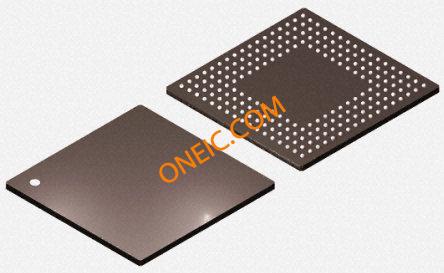
Image Preview
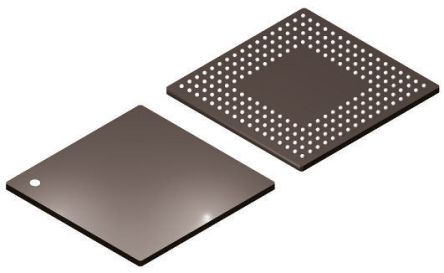
Image Preview