LPC2929FBD144
ARM9-based 32-bit microcontrollers with 768KB flash, 125MHz, and 144-pin LQFP packaging
Manufacturer: nxp
series introduction
# Introduction to the LPC2929FBD144 Product Series
## 1. Overview
The LPC2929FBD144 is a remarkable product series within the realm of microcontrollers, designed and developed to meet the diverse and demanding requirements of modern electronic systems. It belongs to a family of high - performance, low - power 32 - bit ARM - based microcontrollers, offering a comprehensive set of features and capabilities that make it suitable for a wide range of applications.
## 2. Key Features
### 2.1 Processor Core
- **ARM Architecture**: At the heart of the LPC2929FBD144 lies an ARM Cortex - M3 or ARM Cortex - M4 core, depending on the specific variant. These cores are known for their high - performance processing capabilities, efficient instruction execution, and excellent power management. The ARM Cortex - M4 variant, in particular, offers a floating - point unit (FPU), which enables it to handle complex mathematical operations with ease, making it ideal for applications such as audio processing, sensor data analysis, and control algorithms.
- **Clock Speed**: The microcontroller can operate at relatively high clock speeds, typically up to [X] MHz. This high clock speed allows for fast data processing and quick response times, ensuring that the system can handle real - time tasks efficiently.
### 2.2 Memory
- **Flash Memory**: The LPC2929FBD144 is equipped with a generous amount of on - chip flash memory, usually in the range of [X] kilobytes to [Y] kilobytes. This flash memory is used to store the program code, allowing for easy firmware updates and long - term data storage. The flash memory has a high endurance, which means it can withstand a large number of write and erase cycles, making it suitable for applications where frequent code updates are required.
- **SRAM**: In addition to flash memory, the microcontroller also has a significant amount of static random - access memory (SRAM), typically [A] kilobytes to [B] kilobytes. SRAM is used for storing data during program execution, providing fast access to variables and buffers. This large SRAM capacity allows for the implementation of complex algorithms and the handling of large data sets.
### 2.3 Peripherals
- **Communication Interfaces**: The LPC2929FBD144 offers a rich set of communication interfaces, including multiple Universal Asynchronous Receiver - Transmitter (UART) ports, Serial Peripheral Interface (SPI) ports, and Inter - Integrated Circuit (I2C) ports. These interfaces enable the microcontroller to communicate with a wide range of external devices, such as sensors, actuators, displays, and other microcontrollers. Additionally, it may also support more advanced communication protocols like USB, Ethernet, and CAN, which are essential for applications that require high - speed data transfer and network connectivity.
- **Analog - to - Digital Converters (ADCs) and Digital - to - Analog Converters (DACs)**: The microcontroller is equipped with multiple ADCs and DACs, which allow it to interface with analog sensors and actuators. The ADCs typically have a high resolution, such as 12 - bit or 16 - bit, enabling accurate measurement of analog signals. The DACs, on the other hand, can generate analog output signals with high precision, making them suitable for applications such as audio playback and motor control.
- **Timers and Counters**: There are several timers and counters available on the LPC2929FBD144, which can be used for a variety of purposes, such as generating accurate time delays, measuring pulse widths, and controlling the speed of motors. These timers can
Images for reference

144-LQFP
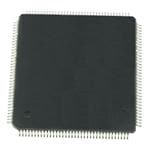
Image Preview
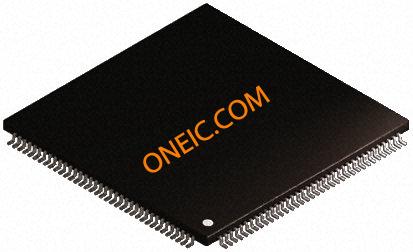
Image Preview